

Over 70 5-Star Reviews
Ever seen one of those huge, rectangular open-top containers on a construction site or in a neighbor’s driveway during a big remodel? That’s a roll-off dumpster, and it’s the secret weapon for any project that generates a serious amount of waste.
It gets its name from a pretty straightforward process: a special truck literally rolls the container off its frame and onto your property. Simple, effective, and ready to be filled.
Think of it as your personal, temporary landfill right where you need it. Unlike the smaller, lidded dumpsters you might see tucked behind a business, a roll-off is built for big, temporary jobs—think home renovations, major cleanouts, or construction debris.
Its design is all about function. The rectangular shape fits neatly on a driveway or job site, and the open top means you can easily toss in bulky items like old drywall, torn-out carpet, or tree branches without a fuss.
What really makes a roll-off dumpster a project game-changer are a few key features designed for pure convenience and safety.
To put it simply, here are the core components that define a roll-off dumpster:
| Feature | Description | Primary Benefit |
|---|---|---|
| Open-Top Design | No lid, allowing easy top-loading of bulky or odd-shaped items. | Speeds up the loading process and accommodates large debris. |
| Large Rear Door | A hinged door that swings open for walk-in access. | Allows for safe and easy loading of heavy materials without lifting. |
| Steel Wheels | Rollers on the bottom that help position the dumpster during delivery. | Protects your driveway and allows for precise placement. |
| High Capacity | Measured in cubic yards, designed to hold several tons of waste. | Consolidates all your project waste in one place, saving time and effort. |
These features come together to create a powerful waste management tool for any major project.
A roll-off dumpster isn’t just a big metal box. It’s a central hub for your project’s waste, keeping your work area clean, safe, and organized so you can focus on the job at hand.
This level of efficiency is why they’re so common on both residential and commercial job sites. With construction and renovation projects on the rise, the need for smart waste solutions is growing right along with it. In fact, the roll-off dumpster market was valued at around $2.5 billion in 2025, and it’s only expected to grow. It’s a clear sign of how essential these containers have become. For a deeper dive into market trends, you can check out the analysis from HTF Market Intelligence.
Picking the right dumpster size can feel like a bit of a guessing game, but it’s probably the most important decision you’ll make to keep your project on track and within budget. If you go too small, you’re stuck ordering a second dumpster and basically doubling your cost. On the flip side, getting one that’s way too big means you’re just paying for air.
The trick is to stop thinking in abstract terms like “cubic yards” and start picturing what these containers can actually hold. Once you connect dumpster sizes to things you already understand, making a confident, cost-effective choice becomes much easier.
You’ll always hear dumpsters measured in cubic yards. It’s the industry standard, but let’s be honest, it’s not a very intuitive measurement for most of us. A much simpler way to think about it is to compare it to something we all know: a pickup truck bed. Your average, run-of-the-mill pickup truck can haul about 2.5 cubic yards of stuff.
Suddenly, those abstract numbers start to make a lot more sense.
See how that changes things? Instead of guessing, you can start to mentally stack up the junk from your project and see which dumpster size is the right match.
This handy decision tree below helps you with that very first question: just how big is this project, really?
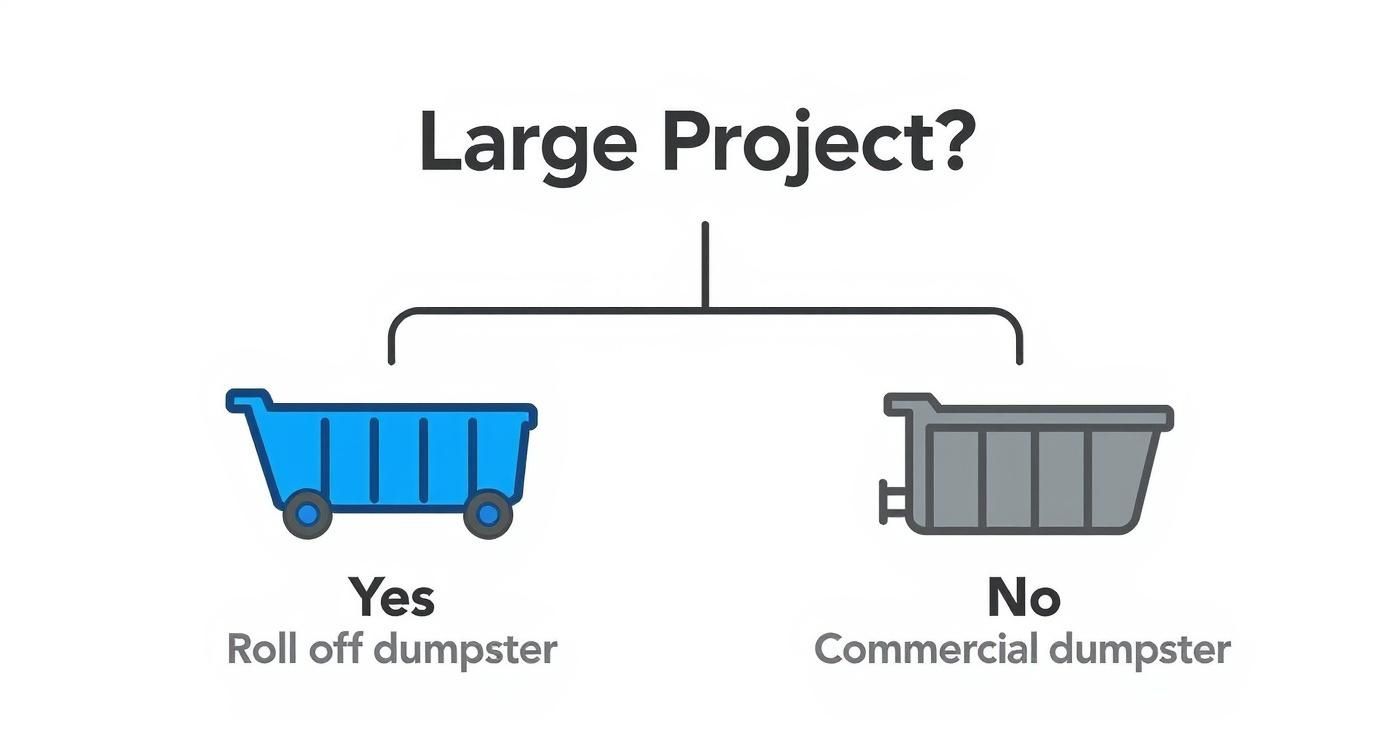
It’s a simple visual that points you in the right direction—a big roll-off for the serious jobs, or a smaller commercial bin for more routine, lighter waste.
Now, let’s get into the nitty-gritty and pair these sizes with the kinds of jobs they were made for. Each dumpster is designed for a certain scale of work, from a simple weekend garage cleanout to a full-blown construction site.
To make things even clearer, here’s a quick breakdown of the common sizes we offer and what they’re typically used for.
| Dumpster Size (Cubic Yards) | Typical Dimensions (L x W x H) | Capacity (Pickup Truck Loads) | Ideal For |
|---|---|---|---|
| 10-Yard | 12′ x 8′ x 3.5′ | ~4 Loads | Small kitchen/bath remodels, single-room cleanouts, dirt/concrete disposal, minor yard debris. |
| 15-Yard | 16′ x 8′ x 4.5′ | ~6 Loads | Multi-room cleanouts (garage, basement), small roofing jobs, flooring removal for a couple of rooms. |
| 20-Yard | 22′ x 8′ x 4′ | ~8 Loads | Large home cleanouts, full roofing projects (up to 3,000 sq ft), mid-sized remodels, significant landscaping jobs. |
| 30-Yard | 22′ x 8′ x 6′ | ~12 Loads | Major home renovations, new construction, full demolition of a garage or shed, large-scale cleanouts. |
| 40-Yard | 22′ x 8′ x 8′ | ~16 Loads | Commercial construction sites, large building demolitions, whole-house cleanouts for large properties. |
This table should give you a solid starting point for figuring out what you need. As you can see, there’s a perfect fit for just about any project you can dream up.
Pro Tip: If you’re on the fence between two sizes, it’s almost always smarter to go with the larger one. The price difference to size up is minimal compared to the cost of renting an entirely new dumpster because you ran out of room.
The need for these containers is only growing. The U.S. dumpster market is projected to skyrocket from $517.4 million to $998.9 million in the next decade, thanks to a boom in construction and a greater focus on responsible waste management.
If you want an even more detailed look at what might work for you, our team created a helpful guide on how to determine what size dumpster you need.
A roll-off dumpster isn’t just a big metal box; it’s the secret weapon for bringing order to chaotic projects. Think of it as your on-demand solution for making a mess disappear, whether you’re overhauling your home or managing a massive construction site. Knowing where they shine can help you see just how perfect one might be for your next big undertaking.
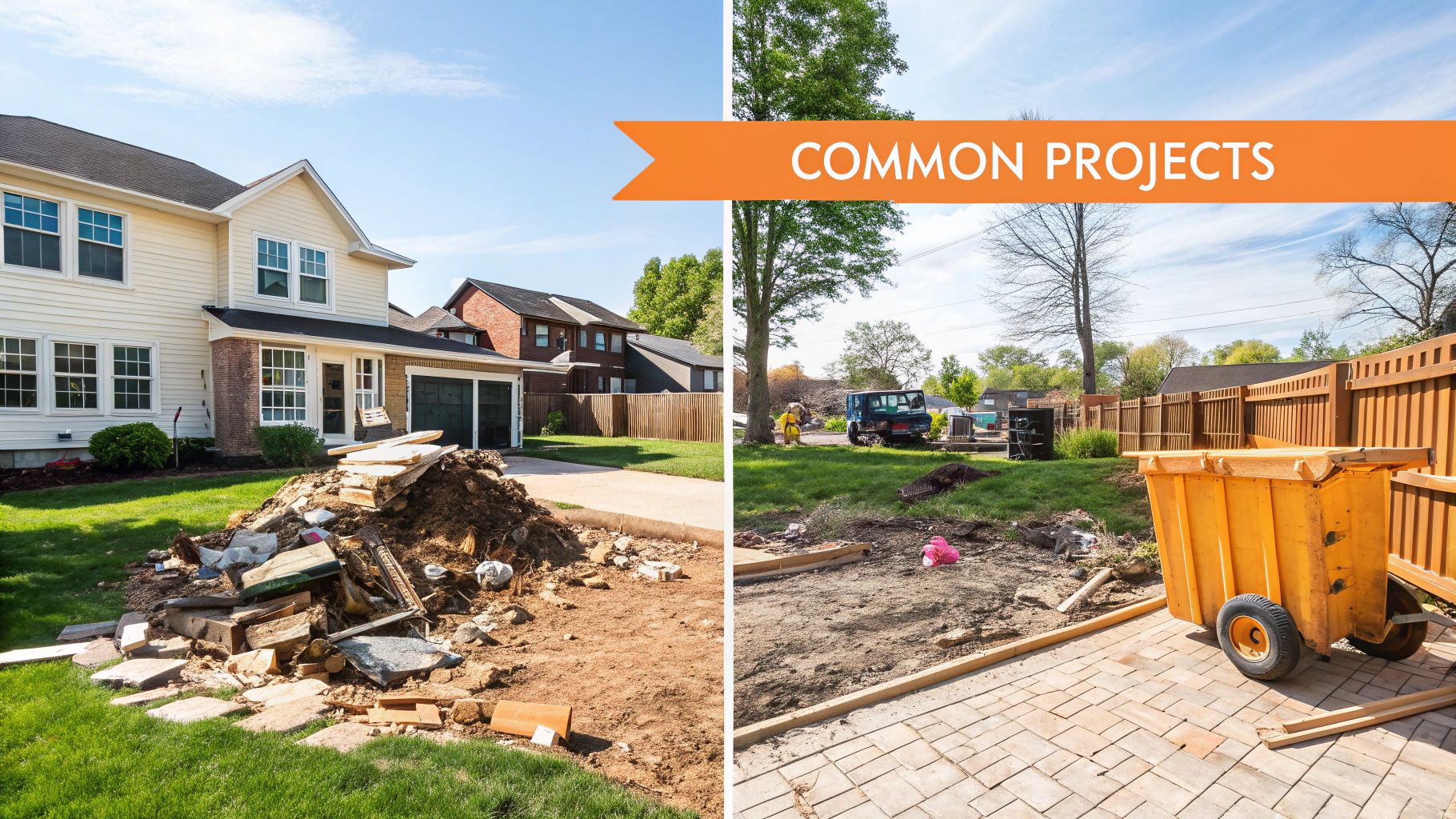
This incredible versatility is why dumpster rentals are such a big deal. The industry, valued at around $15 billion in 2025, is a cornerstone of modern waste management. It’s only getting bigger, proving just how essential these containers are for projects big and small. You can explore more about this market growth to get the full picture.
For any homeowner, a roll-off dumpster parked in the driveway is a game-changer. It means no more loading up the pickup truck for endless trips to the local dump. You save time, gas, and the headache of unloading all that junk yourself.
Here are a few common home projects where a dumpster makes all the difference:
Tackling an overgrown backyard? A 15-yard dumpster handles all the old sod, concrete, and branches in one go. You can focus on creating your new outdoor space instead of worrying about waste removal.
On a professional job site, a roll-off dumpster isn’t just a nice-to-have—it’s an absolute necessity. It’s a critical tool for keeping the site safe, organized, and compliant with regulations. By having one central place for all the debris, you cut down on trip hazards and keep the area clear for workers and heavy equipment.
These dumpsters are essential for:
Beyond the usual projects, roll-off dumpsters are also heroes in more unique or urgent situations. Their massive capacity makes them perfect for jobs that your regular weekly trash service could never handle.
Think about these scenarios:
From a weekend garage cleanout to a months-long construction project, a roll-off dumpster brings a level of efficiency and order that makes any job easier.
Renting a roll-off dumpster probably sounds more complicated than it really is. I get it. But honestly, it breaks down into a few simple, common-sense steps. If you think of it less like a massive logistical puzzle and more like ordering a pizza—just a much bigger, steel one—you’ll see how straightforward it can be.
The whole process, from that first phone call to the final haul-away, is designed to be painless. Let’s walk through it together so you can feel totally confident when you book your next dumpster.
First things first, you need to find a solid, local company. A quick online search will give you options, but don’t just pick the first name you see. Take a minute to check out customer reviews and look at their service area map to make sure they actually deliver to your neighborhood.
Once you’ve zeroed in on a provider, give them a call. To get a truly accurate quote, you’ll want to have a few key details about your project handy:
Having this info ready helps the rental company give you a sharp quote and ensures they can handle your specific needs.
When you get that quote, you need to know exactly what’s included. Most dumpster rental prices are either flat-rate or variable. I always recommend going with a flat-rate price because it bundles everything—delivery, pickup, disposal fees (up to a certain weight), and your rental time—into one clear, upfront cost. No surprises.
Before you say “yes,” make sure you’re clear on these key details:
I can’t stress this enough: getting these details straight from the beginning is the best way to avoid a surprise on your final bill. A reputable company will happily walk you through every line item.
Once you’re comfortable with the terms, it’s time to get on the schedule. I’d suggest booking your dumpster at least 2-3 days ahead of time, especially during the busy spring and summer months when everyone is tackling projects.
On delivery day, a little prep work goes a long way. The spot you picked needs to be totally clear and accessible for a very large truck.
With the dumpster safely on the ground, you can start loading it up. A pro tip for maximizing your space is to load the heaviest items first, spreading them out evenly across the bottom. Then, you can fill in with the lighter debris on top.
Most importantly, do not fill the dumpster past the top rail. An overfilled container is a major safety hazard and is illegal to haul on the road. The driver simply won’t be able to take it.
When your job is done or the bin is full, just give the company a call to schedule the pickup. They’ll come and whisk it away, and that’s it—your project site is clean. It really is that easy.
For a completely seamless experience, you can rent a dumpster from Dumpsters Now with a quick phone call or by booking online. We’ve designed the entire process to be as simple and hassle-free as possible, so you can get back to what matters.
Knowing what you can toss into a dumpster—and more importantly, what you can’t—is probably the single most critical part of a smooth rental. Think of it like this: you wouldn’t throw a car battery in your curbside recycling bin, right? The same logic applies here, just on a much bigger scale.
Following the rules isn’t just about being a good citizen; it’s about safety, environmental protection, and keeping your budget intact by avoiding surprise fines from the landfill.
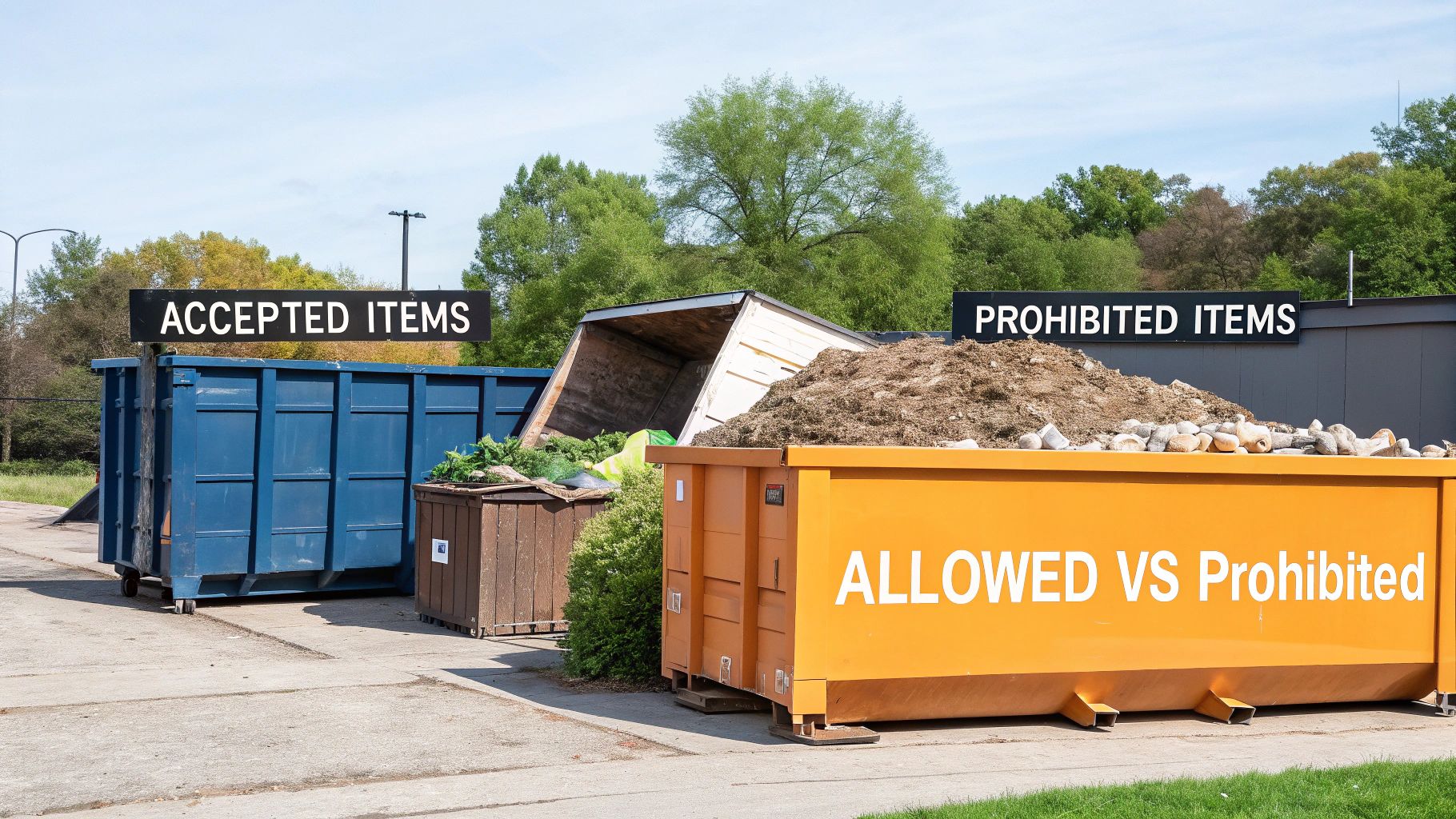
Landfills have very strict guidelines for a reason. They’re designed to prevent nasty chemicals from seeping into our soil and groundwater. When someone sneaks a prohibited item into a dumpster, the landfill can issue some pretty hefty penalties, and those costs unfortunately get passed right back to the renter.
So, what’s fair game? Generally, roll-off dumpsters are built for all kinds of non-hazardous junk from renovations, cleanouts, and construction sites. The list of what’s allowed is actually quite long, which is what makes them so useful for so many different projects.
Here’s a quick rundown of the usual suspects you can throw in without worry:
Stick to this list, and you’re golden. The whole point of renting a dumpster is to make your life easier, and knowing what’s accepted is the first step in making that happen.
Now for the “no-go” list. This is the stuff that requires special disposal because it poses a genuine safety or environmental risk. Tossing any of these items into a roll-off dumpster isn’t just against the rules—it’s often illegal and will definitely result in extra fees.
Why the strict rules? It’s simple: hazardous materials can leak and poison the environment. Things like tires can damage expensive landfill machinery or even become a serious fire hazard.
Here are the items that must NEVER go into your dumpster:
When in doubt, just ask. A quick call to your rental company can save you a world of headaches and keep your project moving forward safely and legally.
Getting a handle on what a roll-off dumpster is and how the whole rental thing works is half the battle. The other half? Finding a local company you can actually count on—one that shows up on time, gives you a straight price, and knows what they’re talking about. That’s exactly where Dumpsters Now comes in. We’re the go-to waste management partner for the entire Metro Detroit area.
When you work with a local crew, you get service from people who genuinely get it. We know the ins and outs of our communities, from a home cleanout in a quiet Northville suburb to a massive construction site right in the city. We’re not just dropping off a metal box; we’re invested in helping your project run smoothly.
The last thing you want to be worrying about mid-project is a headache with your waste removal. We’ve designed our service from the ground up to be as simple and reliable as possible. When you partner with us, you’re getting a promise that we’ll make your job easier.
Choosing a dumpster rental shouldn’t feel like a gamble. It should be a simple, predictable part of your project plan, giving you the peace of mind to focus on the work itself.
We proudly provide fast, reliable roll-off dumpster services to homeowners, roofers, and contractors all across the region. Wondering if we deliver to your job site? You can see every single community we cover by checking out our comprehensive Dumpsters Now service areas.
Ready to clear out the junk and get to work? Our team is ready to give you a fast, no-obligation quote and answer any questions you’ve got.
Just give us a call at (888) 870-9906 or hop on our website to request your quote online. Let Dumpsters Now take care of the mess, so you can focus on what really matters.
Even after getting the basics down, you probably still have a few practical questions. That’s completely normal. Nailing down these final details is what makes the difference between a smooth rental and a frustrating one.
We’ve heard just about every question in the book, so we’ve put together answers to the most common ones that come up. Think of this as the final checklist to make sure you’re ready to go.
This is a big one, and it’s easy to underestimate. The delivery truck is a massive vehicle, and it needs a lot more space to maneuver than most people think. It’s not just about having a spot for the dumpster to sit; it’s about giving the driver a clear, straight shot to back in and place it safely.
To avoid any delivery day headaches, make sure your drop-off area has:
Before we head your way, do a quick sweep and move any cars, boats, or other obstacles out of the designated area. A clear path means a quick, safe drop-off every time.
This all comes down to one simple question: Where will the dumpster be placed? The rules are pretty different for private property versus public property.
If you’re putting the dumpster on your own turf—like your driveway or in your yard—you almost never need a permit. But the moment it touches public land, like a street, sidewalk, or alley, things change. In that case, you will almost certainly need to get a permit from your local city or township. Trying to skip this step can result in some pretty hefty fines.
The Bottom Line: On your property? You’re likely fine. On the street? You’ll need to make a call. When in doubt, a quick chat with your local municipal office will give you a clear answer and save you a potential headache.
It’s tempting to squeeze in that last little bit of debris, but overfilling is a serious problem. First off, it’s a huge safety risk. Material sticking out over the top can easily fall off while the truck is on the road, creating a hazard for other drivers. For this reason, DOT regulations strictly prohibit our drivers from hauling overloaded containers.
If our driver shows up for pickup and your dumpster is overfilled, they won’t be able to take it. You’ll be asked to level the load, and you’ll likely be charged a “trip fee” for the extra visit. The best rule of thumb is to keep all debris at or below the top rail of the dumpster.
A little planning goes a long way here. To make sure you get the dumpster size you need, right when you need it, we recommend booking at least 2 to 3 days in advance.
If you’re planning a project during our busiest times—think spring cleaning or summer renovations—giving us a week’s notice is an even better idea. We can sometimes accommodate same-day or next-day requests, but booking ahead guarantees we’ll have your dumpster ready to go, keeping your project right on track.
Ready to clear out the clutter and get your project rolling? The team at Dumpsters Now is here to make renting a dumpster in Metro Detroit as easy as possible. Our pricing is clear, our service is dependable, and we’re committed to helping you get the job done.
You can get a free, no-pressure quote online or just give us a call. Find out more and book your dumpster today at Dumpsters Now.
Yes. All of our dumpster rentals will have a hinged back door that will easily swing open.
No. Roll-off dumpster rentals do not include any type of cover or lid. We recommend using a tarp to cover the dumpster to prevent nearby residents from throwing unwanted trash in your dumpster.
The truck that carries the roll off dumpster drives onto a scale at the disposal facility where an initial weight is recorded. Next, the truck empties the contents and drives onto the scale again to record the weight of the truck and the empty dumpster. The difference between the first and second weight is the weight of the debris in the dumpster. All of our scales are regulated by the state bureau of weights and measures.
Large and bulky electronic waste items, mattresses, tires, and items containing freon may incur a per-item fee at the disposal facility. Every situation is different, so please contact us for more details.
Hazardous waste is prohibited. This includes chemical products, herbicides, pesticides, radioactive material, solvents, flammable liquids, propane tanks, motor oil, transmission oil, contaminated oils mixed with solvents, gasoline, antifreeze, petroleum contaminated soil, lead paint chips, microwaves, fluorescent tubes, medical waste, asbestos, and animals.
Contact us and let us know what you plan on using the dumpster for. We’ll let you know if any of your items are prohibited.
The price of our dumpster rentals include a one-time delivery and removal for the selected roll off dumpster, a disposal weight allowance, and the agreed upon rental period.
This depends on the size of the dumpster you rent. With that being said, the Department of Transportation regulations limit the weight of any roll off dumpster to approximately 15 tons.
Please review the applicable additional weight charges per the terms and conditions of your agreement. Contact us for more information.
Yes. If the weight of the materials in your dumpster exceeds the included weight quoted in your order confirmation, you will be charged for the additional weight. We are charged by weight at the disposal facility and we pass along this charge accordingly.
Don’t let clutter or delays hold you back. With Dumpsters Now, you get fast, reliable dumpster rentals delivered when you need them.
Call or book online today!
what can you put in a dumpster: Quick Guide to Allowed Items says:
[…] need to be disposed of by professionals who can neutralize them safely. Getting a solid grasp on what is a roll-off dumpster and its proper use is the first step. Other items, like tires or refrigerators, simply can’t be […]
How to Plan Home Renovation: A Smart Guide says:
[…] Don’t confuse these with the smaller, lidded dumpsters you see behind restaurants. A roll-off container is a heavy-duty, open-top beast designed specifically for construction and demolition waste. To get a better feel for them, take a look at our guide on what exactly a roll-off dumpster is. […]