

Over 70 5-Star Reviews

It's one of the most common questions we hear on landscaping and construction jobs across Southeast Michigan: how many square feet does a single cubic yard cover?
The tricky part is, there's no single answer. A cubic yard is a measure of volume (think of the space inside a roll-off dumpster), while square feet measure area (like the flat ground). The missing piece of the puzzle is always depth.
For example, at a thin 1-inch depth, 1 cubic yard of material will spread out to cover 324 square feet. But if you're laying that same material 6 inches deep, it will only cover 54 square feet.
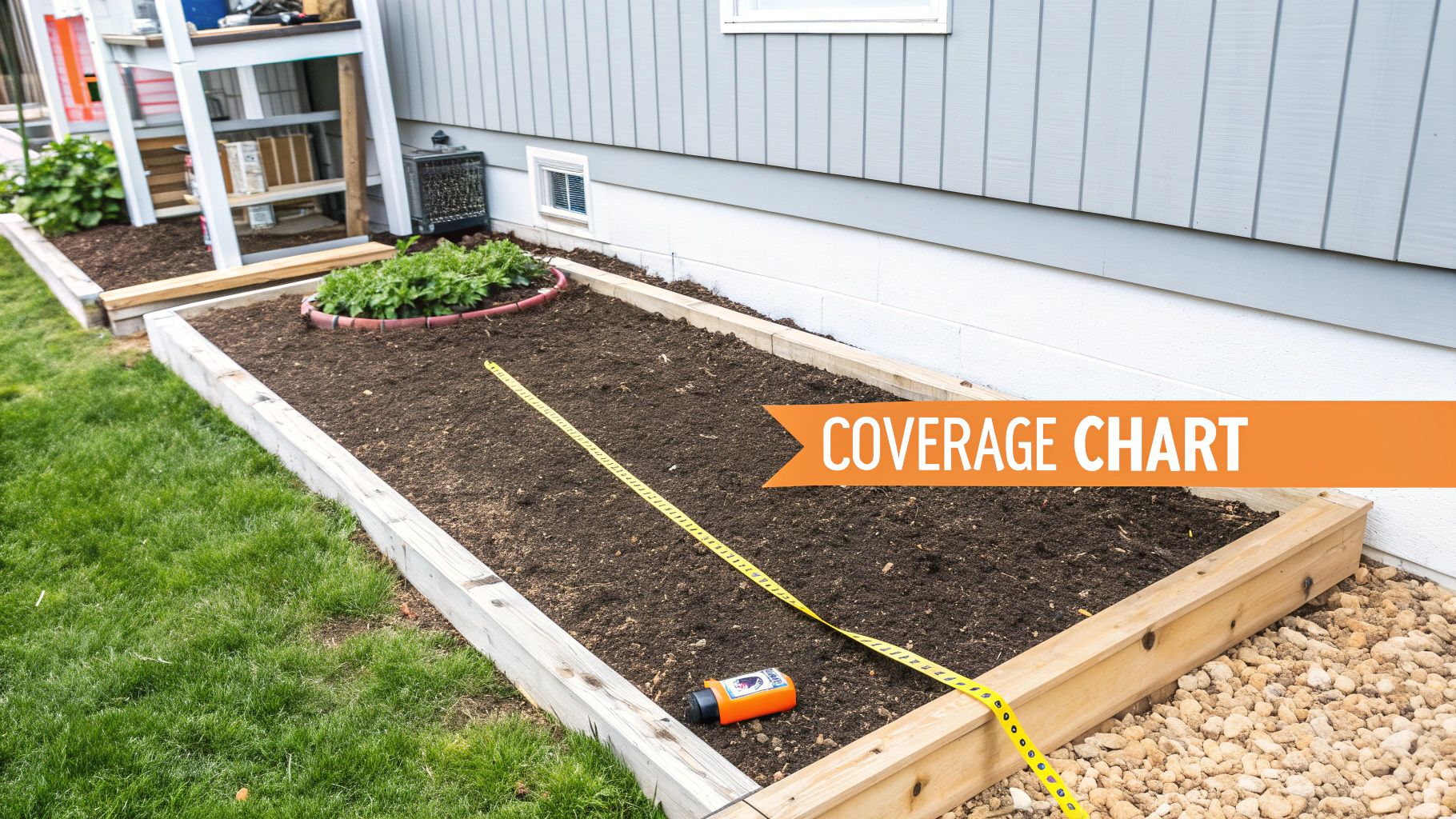
Think about it like this: imagine pouring a pitcher of water onto your driveway in Oakland County. It spreads out thin and covers a huge area. Now, pour that same pitcher of water into a tall, skinny bucket. It covers a much smaller area at the bottom, but the water level is much deeper.
The amount of water—the volume—never changed. All that changed was the depth, which directly impacted the square footage it covered. This is the exact same principle for materials like soil, gravel, or mulch that you're clearing and need to toss in a roll-off dumpster.
Before you can figure out your coverage area, you need one foundational number:
1 Cubic Yard = 27 Cubic Feet
This is the starting point for all our calculations. From here, we can figure out the square footage for any project, whether you're in Oakland, Wayne, or Macomb County. All we need is the depth you plan to lay the material.
The basic formula is:
Square Feet = (Cubic Yards × 27) ÷ Depth in Feet
For example, let's say you're spreading topsoil 3 inches deep. First, you have to convert your depth from inches to feet (3 inches ÷ 12 inches/foot = 0.25 feet). Now, plug it into the formula:
(1 Cubic Yard × 27) ÷ 0.25 feet = 108 square feet
This quick calculation is the key to avoiding over-ordering materials or renting a roll-off dumpster that’s too small for the debris you're digging up.
To make things even easier, here’s a handy table with some of the most common depths for landscaping and construction projects.
Use this table for a quick estimate of the area one cubic yard of material will cover based on your desired application depth.
| Material Depth (Inches) | Approximate Square Feet Covered |
|---|---|
| 1 inch | 324 sq. ft. |
| 2 inches | 162 sq. ft. |
| 3 inches | 108 sq. ft. |
| 6 inches | 54 sq. ft. |
| 12 inches (1 foot) | 27 sq. ft. |
This table is a lifesaver for planning. A thin layer of decorative mulch might only be 1-2 inches, while a new gravel driveway base could easily be 6 inches deep. As you can see, the difference in coverage is huge, and so is the volume of debris you'll create.
To get a handle on converting 1 cubic yard to square feet, you first have to really picture what you're dealing with. It's a classic apples-to-oranges problem until you add one key ingredient.
Imagine a perfect cube, like a big shipping crate, that measures 3 feet long, 3 feet wide, and 3 feet tall. That’s a cubic yard. It’s a measure of volume—it tells you how much stuff you can fit inside a roll-off dumpster.
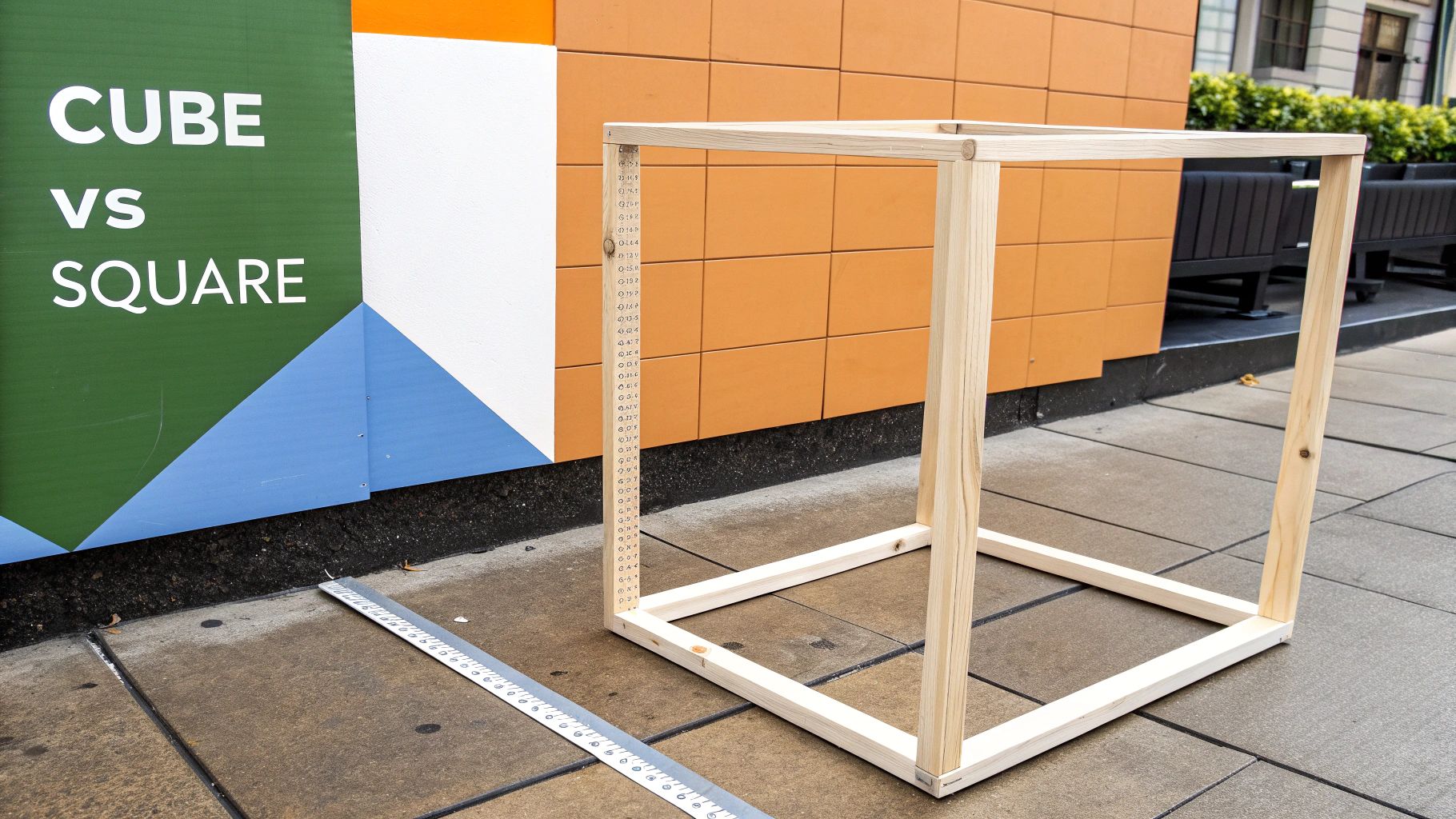
Now, think about a single flat tile on your floor that’s 1 foot long and 1 foot wide. That’s a square foot. It's a measure of area, telling you how much flat surface something covers. It has length and width, but basically no thickness.
Trying to compare a cubic yard to a square foot is like asking how many gallons of water it takes to cover a floor tile. The question doesn't make sense on its own. One is about holding material (volume), and the other is about covering a surface (area).
The crucial piece that connects volume and area is depth. When you take all the material out of that three-dimensional cubic yard and spread it over a flat, two-dimensional area, the thickness of the layer is what determines how many square feet it can cover.
A cubic yard is the go-to unit for ordering bulk materials like mulch, soil, or gravel. Digging into the math, it’s a cube with one-yard sides, which works out to a total of 27 cubic feet (that’s 3 ft × 3 ft × 3 ft). This is the number you really need to remember for any project in Oakland County and beyond. You’ll measure your garden bed in square feet but order your topsoil in cubic yards.
This is exactly why you can't just ask, "How many square feet are in a cubic yard?" without answering, "How deep do you want to spread it?" That single detail changes everything, both for ordering your materials and for figuring out how much debris you'll need to haul away—which is where a roll-off dumpster becomes a lifesaver.
Ready to map out your project? Once you get the relationship between volume, area, and depth, you can use a dead-simple formula to figure out exactly how many square feet 1 cubic yard of material will cover. This is your key to ordering the right amount of mulch or soil and knowing how much space your debris will take up in a roll-off dumpster.

The whole calculation hinges on one critical fact: 1 cubic yard = 27 cubic feet. If you want a closer look at why, you can check out our guide on converting 1 cubic yard to cubic feet that breaks this fundamental measurement down.
Here's the only formula you'll need:
Square Feet = (Number of Cubic Yards × 27) / Depth in Feet
The biggest hurdle for most folks is getting the project's depth converted from inches to feet. It's easier than it sounds! Since there are 12 inches in a foot, you just divide your depth in inches by 12.
Let’s walk through a real-world scenario. Imagine you live in Macomb County and want to put down a fresh 3-inch layer of mulch in your garden beds. You have 1 cubic yard of mulch ready to go.
Here's how to use our formula:
That quick bit of math shows that your single cubic yard will cover a 108 square foot area perfectly. This same logic works whether you're spreading new material or trying to figure out how much dirt you're digging up and need to toss in a roll-off dumpster.
Okay, let’s get these numbers off the page and into the real world. Formulas are great, but seeing how they apply to a typical project you might tackle right here in Southeast Michigan makes all the difference in planning.
Picture a homeowner in Oakland County putting in a new paver patio. Before they can lay a single paver, they need a solid 4-inch gravel base. Let's run the numbers to see how much ground one cubic yard of gravel will cover for them.
Just like that, they know one yard of gravel covers an 81 square foot area at the depth they need. If their patio is planned for 200 square feet, they can confidently order three cubic yards to get the job done right.
Now, let's shift gears to a landscaper over in Wayne County who's renovating a tired old lawn. The plan is to spread a fresh 2-inch layer of rich topsoil to give the new grass seed a perfect start. How much area does one cubic yard of topsoil cover for this job?
Knowing this is essential for ordering the right amount of material, but that’s only half the battle. Every project that brings in new material also creates debris that needs to go out. Digging up that old sod, excavating for the new patio, or clearing out old mulch generates heavy waste you can’t just haul to the curb in Macomb County.
This is where your project planning pivots from material delivery to smart waste management. The volume of dirt, sod, and old gravel you remove is directly tied to the new material you're bringing in.
Handling this waste efficiently is what separates a smooth-running project from a messy, frustrating one. This is exactly why planning for the right kind of roll-off dumpster is a critical step. For heavy debris like dirt and rock, you need a container built to handle serious weight without surprise overage fees. You can learn more about how a roll-off dumpster is designed for these tough jobs, making sure your cleanup is as seamless as the installation.
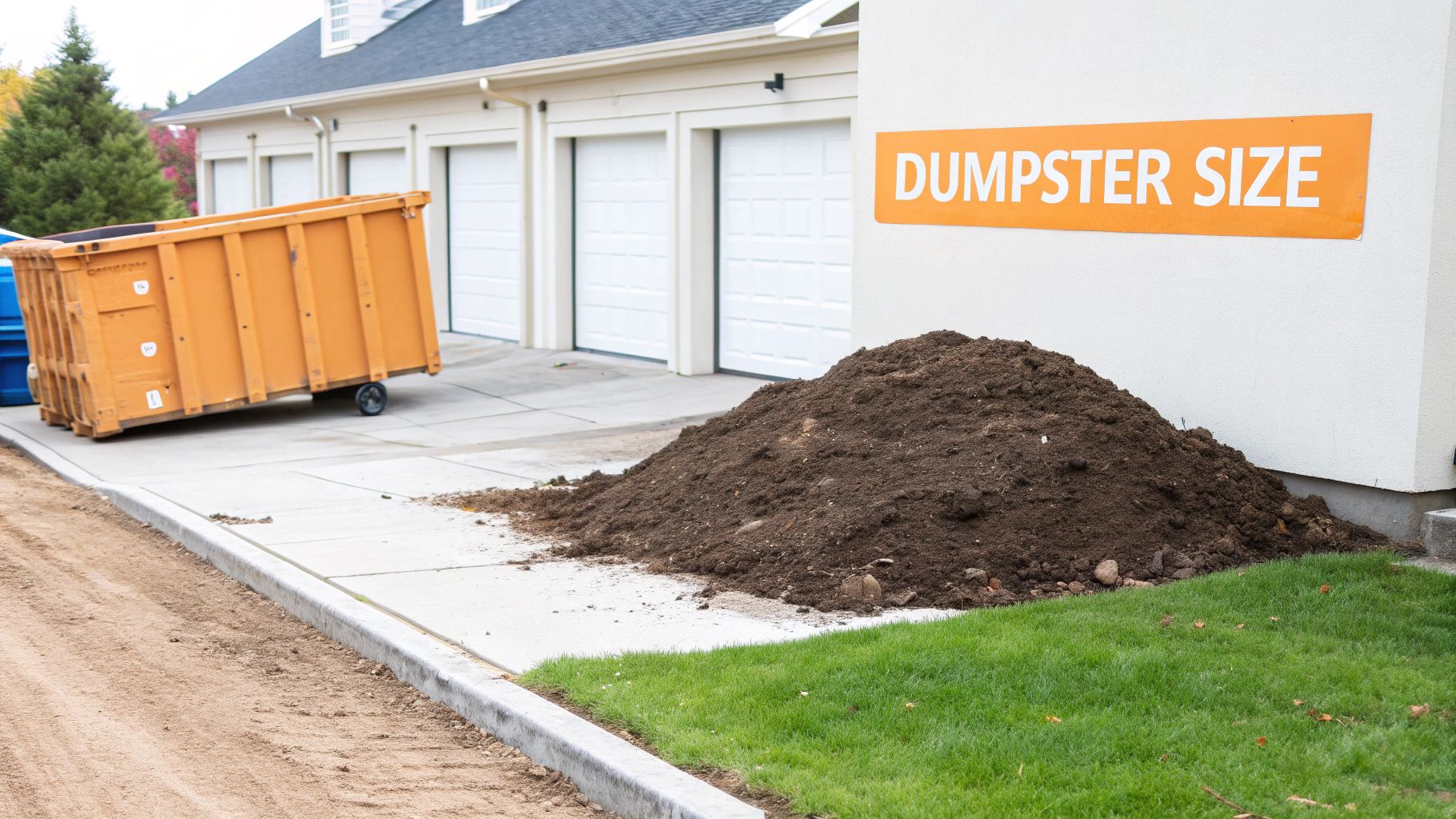
A good project plan accounts for everything—the materials you bring in and, just as importantly, the waste you need to haul out. The amount of soil you dig up, concrete you break apart, or old landscaping you remove directly impacts the roll-off dumpster size you’ll need to keep your site clean.
This is where understanding how volume and area work together becomes essential. Say you’re digging out a 108-square-foot garden bed to a depth of 3 inches. You’ve just produced exactly 1 cubic yard of dirt. That might not sound like much, but its weight is a whole different story.
A single cubic yard of dense material like soil, rock, or concrete can easily tip the scales at over 2,000 pounds. This is exactly why you can't just pick a roll-off dumpster based on its size alone, especially for heavy-duty projects in Wayne or Macomb County. Doing so can be a costly mistake.
For these super-heavy materials, a 10-yard roll-off dumpster is almost always the best tool for the job. Here’s why:
Choosing the right roll-off container ensures your cleanup is as efficient and cost-effective as the rest of your project. It prevents safety issues, avoids unexpected fees, and keeps your job site moving smoothly.
By connecting your material calculations to your waste management plan, you cover all your bases. If you’re still trying to figure out how your project’s debris will fit, our guide can help you figure out what size dumpster you need for your specific job.
Figuring out the numbers for a project can feel like a pop quiz you didn't study for. Getting the calculations right from the start is the key to a smooth job, whether you're ordering gravel or booking a roll-off dumpster rental to haul away the mess. Here are some quick answers to the questions we hear all the time.
Working backward from an area is a common problem, and it's simpler than you think. You just reverse the formula we've been using. First, you'll need to find the total volume in cubic feet by multiplying your area (in square feet) by how deep the material needs to be (in feet).
Let's say you're putting a gravel base down for a 300 sq. ft. patio in Oakland County. If you need a 4-inch deep base (which is 0.33 feet), your total volume is 99 cubic feet (300 x 0.33).
From there, just divide by 27 to get your cubic yards: 99 / 27 ≈ 3.67 cubic yards. This tells you exactly how much material to order and how much debris you might create.
Nope. The math is pure geometry—1 cubic yard will always equal 27 cubic feet. It doesn’t matter if it’s light-as-air mulch or heavy, dense gravel.
But here’s the critical detail: the weight is a completely different story. This is the single most important thing to remember when you're choosing a roll-off dumpster. A cubic yard of dirt can easily weigh over a ton, while the same volume of mulch is a fraction of that. Always tell your dumpster provider in Wayne County exactly what you’re tossing so you don’t get hit with overweight fees.
When you're dealing with seriously heavy stuff like dirt, rock, or broken concrete, a 10-yard roll-off dumpster is your best friend.
Even if you only have one or two cubic yards of material, this smaller dumpster is built to handle immense weight without buckling. A bigger roll-off dumpster might hold more volume, but you'd hit its weight limit long before you filled it. Sticking with a 10-yard dumpster for heavy debris keeps you safely under the limits and makes for much easier loading.
Planning a project in Macomb, Wayne, or Oakland County? Dumpsters Now has the right roll-off dumpster for your debris, with fast, reliable delivery to keep your job on track. Book your rental at https://dumpstersnow.com today.
Yes. All of our dumpster rentals will have a hinged back door that will easily swing open.
No. Roll-off dumpster rentals do not include any type of cover or lid. We recommend using a tarp to cover the dumpster to prevent nearby residents from throwing unwanted trash in your dumpster.
The truck that carries the roll off dumpster drives onto a scale at the disposal facility where an initial weight is recorded. Next, the truck empties the contents and drives onto the scale again to record the weight of the truck and the empty dumpster. The difference between the first and second weight is the weight of the debris in the dumpster. All of our scales are regulated by the state bureau of weights and measures.
Large and bulky electronic waste items, mattresses, tires, and items containing freon may incur a per-item fee at the disposal facility. Every situation is different, so please contact us for more details.
Hazardous waste is prohibited. This includes chemical products, herbicides, pesticides, radioactive material, solvents, flammable liquids, propane tanks, motor oil, transmission oil, contaminated oils mixed with solvents, gasoline, antifreeze, petroleum contaminated soil, lead paint chips, microwaves, fluorescent tubes, medical waste, asbestos, and animals.
Contact us and let us know what you plan on using the dumpster for. We’ll let you know if any of your items are prohibited.
The price of our dumpster rentals include a one-time delivery and removal for the selected roll off dumpster, a disposal weight allowance, and the agreed upon rental period.
This depends on the size of the dumpster you rent. With that being said, the Department of Transportation regulations limit the weight of any roll off dumpster to approximately 15 tons.
Please review the applicable additional weight charges per the terms and conditions of your agreement. Contact us for more information.
Yes. If the weight of the materials in your dumpster exceeds the included weight quoted in your order confirmation, you will be charged for the additional weight. We are charged by weight at the disposal facility and we pass along this charge accordingly.
Don’t let clutter or delays hold you back. With Dumpsters Now, you get fast, reliable dumpster rentals delivered when you need them.
Call or book online today!