

Over 70 5-Star Reviews
If you're drowning in a sea of boxes after a move, renovation, or a major delivery, you're likely asking the same question as many others in Oakland, Wayne, and Macomb counties: where to recycle cardboard? While your curbside bin is great for weekly mail and a few Amazon boxes, it quickly becomes overwhelmed by larger volumes. For homeowners tackling a major cleanout or contractors managing construction debris, finding an efficient disposal method is critical.
This guide moves beyond the basics of curbside recycling to explore practical, local solutions for managing your cardboard waste. We'll detail eight distinct options, from municipal drop-off sites in local communities like Sterling Heights and Warren to lesser-known avenues like scrap dealers. Each method is broken down with its pros and cons to help you make an informed choice.
We'll also cover the most efficient alternative for large-scale projects: a roll-off dumpster rental. This option consolidates all your cardboard, along with other project debris, into a single, convenient pickup. Our goal is to provide a clear roadmap, helping you choose the perfect strategy whether you have a small stack or a mountain of corrugated cardboard to clear from your Metro Detroit home or job site.
For most households, the answer to "where to recycle cardboard" starts right at the end of the driveway. Your local curbside recycling program is the most convenient and accessible method for managing the day-to-day flow of cardboard boxes from online shopping, groceries, and other routine purchases. This service is designed to handle typical residential volumes, making it an essential part of sustainable waste management.
Municipalities across Metro Detroit, from Warren in Macomb County to Royal Oak in Oakland County, offer single-stream recycling that includes cardboard. The process is simple: flatten your boxes, place them in the provided recycling cart, and roll it to the curb on your designated collection day. This system is perfect for consistently managing a household's cardboard waste without requiring special trips.
This option is the ideal first choice for your weekly accumulation of cardboard. It’s designed for the typical volume generated by a family, including:
While convenient, curbside programs have strict rules to ensure the recycling stream remains uncontaminated. Failing to follow them can result in your recycling being rejected or, worse, contaminating an entire truckload.
Common Rules and Preparation Tips:
Local Pro-Tip: If you have more cardboard than will fit in your cart after a move or a major appliance delivery, don't just leave it next to the bin. Most haulers will not pick up loose items. This is when you need to consider a municipal drop-off center or, for very large volumes, a roll-off dumpster rental.
When your curbside bin is overflowing or you’ve just completed a move, the next logical stop for where to recycle cardboard is a local drop-off center. These facilities are designed to handle larger quantities and sometimes a wider variety of materials than residential programs. They serve as essential community hubs, consolidating recyclables before they are sent to larger sorting plants and sold to manufacturers.
Many municipalities in Southeast Michigan, including those in Wayne and Macomb counties, operate their own drop-off sites for residents. For instance, some cities offer designated days or locations where you can bring excess cardboard from large appliance boxes or post-holiday clear-outs. These centers are a fantastic, often free, resource for managing those occasional surges in recyclable waste that a single cart just can't handle.
This option is the perfect solution for volumes that are too large for your weekly bin but not massive enough to require a commercial service. It’s ideal for:
While more accommodating than curbside services, drop-off centers still have rules to ensure efficient operations. The primary goal is to collect clean, high-quality material that can be successfully recycled.
Common Rules and Preparation Tips:
Local Pro-Tip: Use online tools like Earth911.com to find the nearest recycling center. If you're undertaking a major home renovation or cleanout that generates more than just cardboard, you'll produce a mix of waste. Understanding what materials can be disposed of in a dumpster can help you decide if a roll-off dumpster rental is a more efficient solution for your entire project.
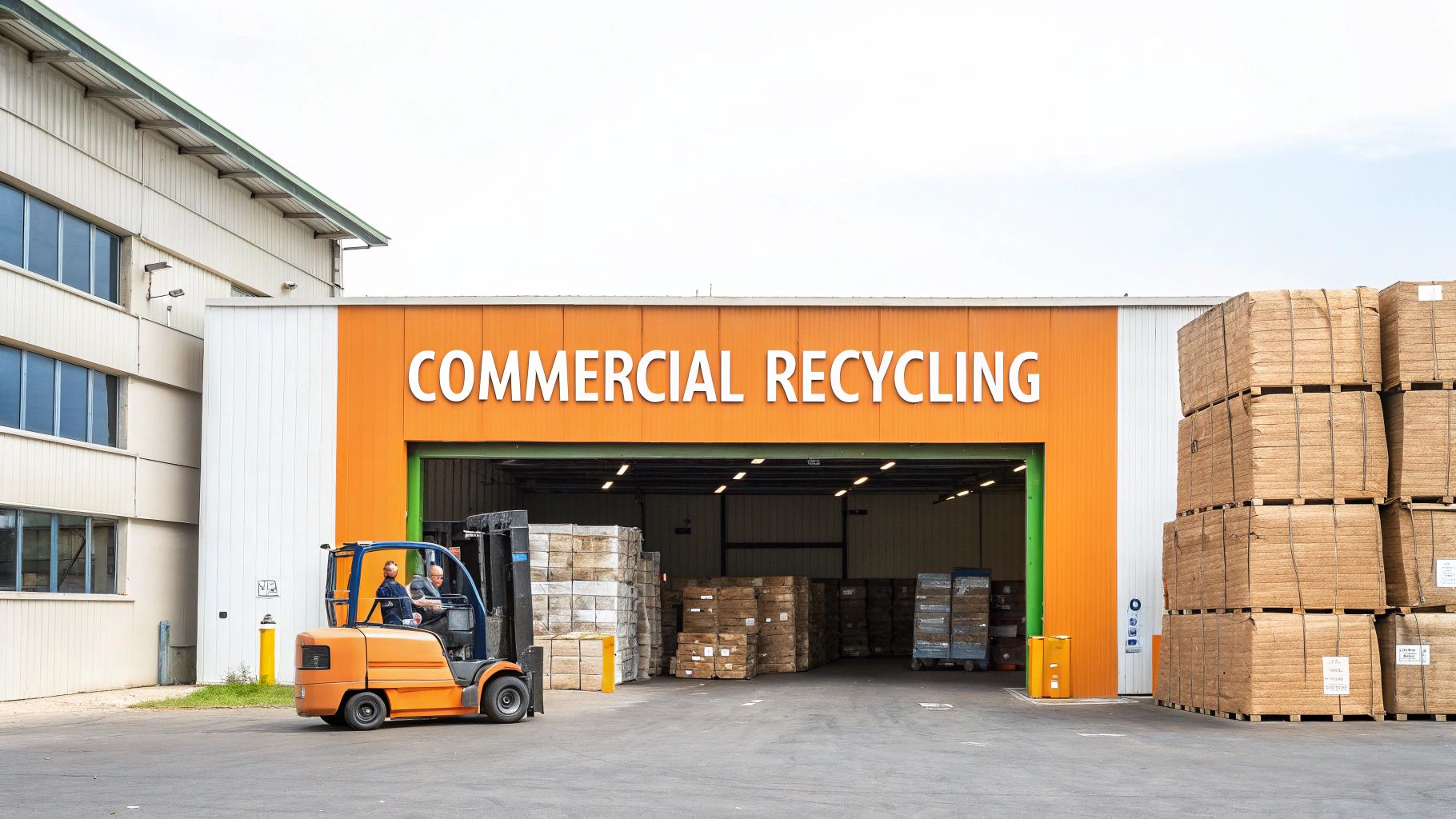
For businesses, warehouses, and large retailers, the sheer volume of cardboard waste can overwhelm standard recycling options. Commercial cardboard recycling services are the B2B solution, providing scheduled pickups and on-site containers. These programs are designed to handle industrial-scale volumes far beyond what a residential or even a municipal drop-off center can manage. Often, this involves front-load dumpsters picked up on a regular schedule.
Leading providers offer comprehensive commercial programs across Metro Detroit. They work with businesses in industrial hubs from Sterling Heights to Livonia to establish efficient, ongoing collection systems. However, a permanent commercial dumpster isn't always the right fit. For temporary projects like an office cleanout or a one-time inventory purge, a roll-off dumpster provides a more flexible solution without a long-term contract.
This option is essential for any operation generating a consistent, high volume of cardboard. It's the standard for:
Optimizing a commercial recycling program requires more than just scheduling a pickup. Proper management ensures maximum efficiency and potential financial return.
Common Practices and Optimization Tips:
Local Pro-Tip: For one-time large-scale cleanouts, such as an office move or a warehouse clear-out in Wayne County, a permanent front-load dumpster contract is unnecessary. In these scenarios, a temporary roll-off dumpster rental is a more flexible and cost-effective solution for managing a sudden surge of cardboard and other debris. For more guidance, check out our dumpster size guide to find the right fit for your project.
Beyond your curb and local drop-off centers, another convenient option for where to recycle cardboard can often be found at the very stores where your boxes originated. Many major retailers have established take-back programs, allowing customers to return cardboard packaging, especially from large items like furniture or appliances. This service leverages the store's own commercial recycling infrastructure to help consumers manage bulky packaging.
These programs are particularly common at big-box stores that generate immense amounts of cardboard from their own inventory shipments. By offering this to customers, retailers like IKEA or Best Buy create a closed-loop system, taking responsibility for the packaging they introduce into the community. It’s a fantastic way to offload a large appliance box right after you've unboxed your purchase, avoiding the need to cut it down for your home recycling bin.
This option is ideal for managing the packaging from a specific, often large, purchase. It’s a perfect solution for situations involving:
While helpful, these programs are not designed to be public dumping grounds for all your household cardboard. They are intended for packaging associated with store products, and each retailer has its own set of rules and limitations.
Common Rules and Preparation Tips:
Local Pro-Tip: While stores like Best Buy have recycling kiosks, they are typically for smaller electronics and not large amounts of cardboard. For the big boxes from a new TV or appliance, you often need to coordinate with the customer service desk or a loading dock employee. Calling the specific store in Sterling Heights or Southfield ahead of time will save you a trip.
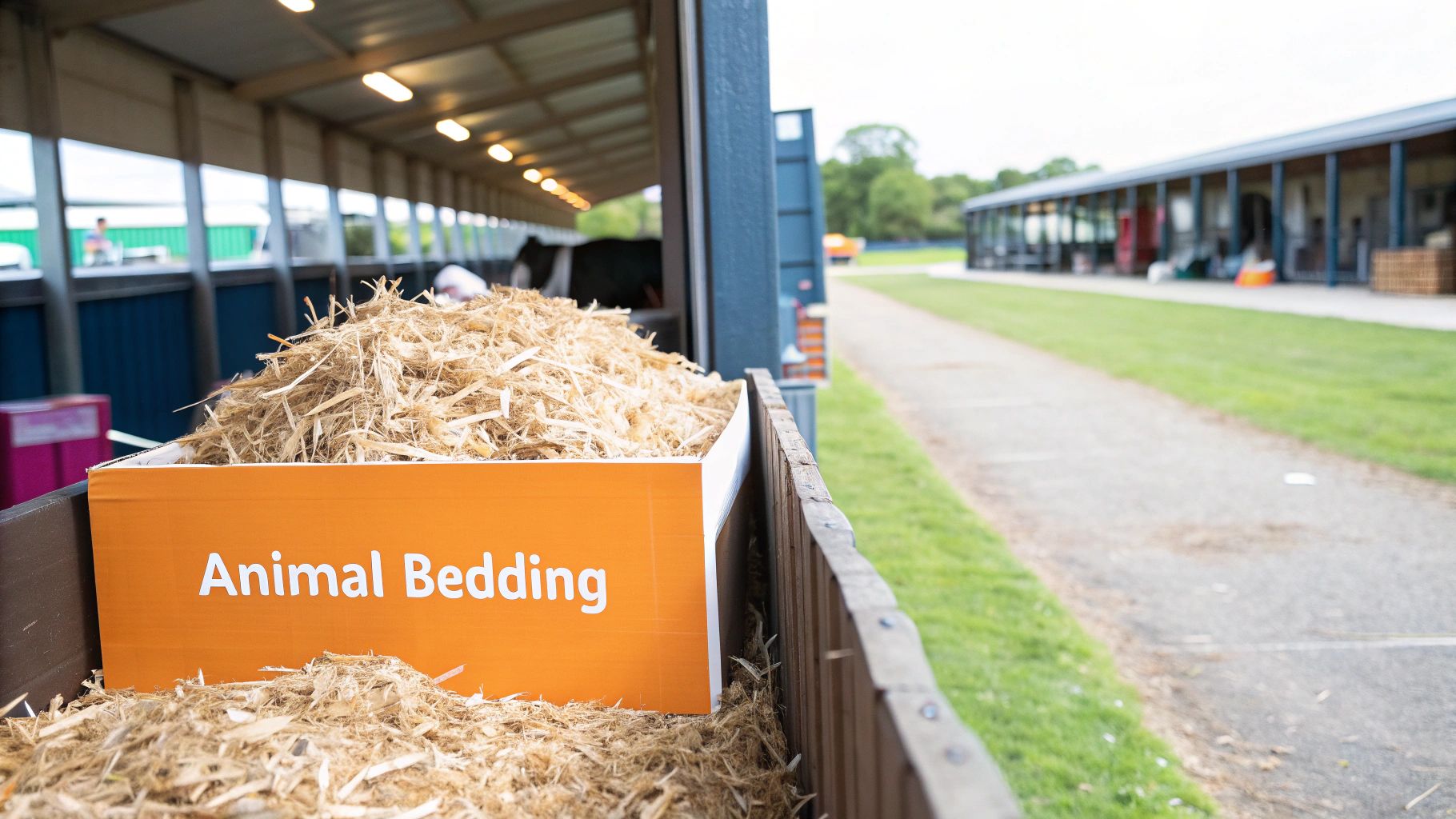
Beyond the traditional recycling stream, there's a unique and environmentally productive answer to the question of where to recycle cardboard: repurposing it for agricultural and horticultural use. This alternative channel diverts clean, unprinted cardboard from processing facilities and gives it a second life as animal bedding, weed-suppressing mulch, or a carbon-rich component in compost piles. It's an excellent way to support local, small-scale operations while sustainably managing your cardboard waste.
Local horse stables, community gardens, and even some small farms in places like Macomb County or rural Oakland County often seek out cardboard for these purposes. The material's absorbent, biodegradable nature makes it a valuable resource. For those with a large quantity of suitable cardboard, this method provides a direct, beneficial impact that goes beyond standard municipal recycling.
This option is a perfect fit for individuals and businesses with a supply of clean, plain brown cardboard. It is particularly useful for:
The success of this method hinges on providing material that is safe for animals and plants. Contamination can render your cardboard useless, so preparation is critical. These outlets are not a dumping ground for all types of cardboard.
Common Rules and Preparation Tips:
Local Pro-Tip: Community gardening groups on social media or local equestrian forums can be great places to find operations in need of cardboard. If you've just moved to a home in Wayne County and have dozens of clean boxes, a quick post could connect you with a local stable looking for bedding material, creating a win-win scenario.
For businesses or individuals with exceptionally large and consistent volumes of clean cardboard, recycling can transition from a simple disposal task to a revenue-generating activity. Cardboard buyback programs and scrap dealers are specialized facilities that purchase recyclable materials, including cardboard, based on weight and current market prices. This option is where to recycle cardboard when you have bulk quantities that exceed the capacity of standard residential or even small commercial services.
These dealers, often found in industrial areas across Wayne and Macomb counties, aggregate materials from various sources. They then process, bale, and sell the cardboard directly to paper mills. By cutting out intermediate steps, they can offer payment for clean, properly sorted material, making recycling profitable for those who can supply it at scale.
This approach is not for the occasional household cleanout; it’s designed for consistent, high-volume cardboard generators. It is the ideal choice for:
The primary requirement for selling your cardboard is quantity and quality. These programs have stringent standards because their business model depends on reselling clean, high-grade material to mills. Contamination can lead to outright rejection of your load.
Common Rules and Preparation Tips:
Local Pro-Tip: Commodity prices for cardboard fluctuate daily. Before hauling a large load to a scrap dealer, call ahead to confirm their current price per ton and their specific receiving requirements. For businesses in Oakland County with predictable volumes, some dealers may even offer container placement and pickup services, though a roll-off dumpster often provides more flexibility for variable loads.
Beyond municipal services, a growing number of manufacturers are taking direct responsibility for the packaging they create. These programs, often part of a broader strategy called Extended Producer Responsibility (EPR), offer another convenient answer to the question of where to recycle cardboard. EPR principles hold companies accountable for the entire lifecycle of their products, including the cardboard boxes they ship them in.
This approach shifts some of the recycling burden from consumers and local governments back to the corporations that produce the packaging. In practice, this can take the form of in-store drop-off points, mail-back options, or partnerships with retailers. While not as widespread in the U.S. as in Europe or Japan, several major brands offer these services, providing a direct and responsible recycling channel.
This option is particularly useful for packaging from specific brands you frequently purchase from, or for specialty packaging that might be harder to recycle. Consider using it for:
The biggest limitation is availability; only a fraction of companies currently offer robust take-back programs. Success depends on consumer awareness and participation, which can be low.
Common Rules and Preparation Tips:
Local Pro-Tip: While direct manufacturer programs are still evolving in Michigan, many local Whole Foods Markets in areas like Troy and West Bloomfield participate in programs to accept Amazon packaging. It's an excellent way to combine a grocery run with your cardboard recycling duties, keeping those materials out of your home's waste stream.
For businesses, industrial operations, or even community groups with massive quantities of cardboard, the most direct path to recycling is working with fiber recovery facilities and paper mills. These are the industrial heart of the recycling ecosystem, where baled cardboard is processed on a massive scale. Instead of passing through intermediate sorting centers, your material goes straight to the source to be pulped and transformed into new paper products.
Facilities like those operated by International Paper or Cascades Recovery+ are where the magic happens. They take compressed bales of cardboard and, through a mechanical and chemical process, break them down into a slurry. This slurry is then cleaned, refined, and pressed into new sheets of containerboard, which becomes the next generation of shipping boxes. This direct-to-mill approach is the most efficient form of cardboard recycling available.
This option is tailored for high-volume commercial and industrial generators of clean cardboard. It is not a solution for homeowners. Consider this route if you manage:
Engaging directly with mills or large-scale recovery facilities requires a significant commitment to volume and quality control. They have stringent standards because contamination can damage expensive equipment and ruin entire batches of new paper.
Common Rules and Preparation Tips:
Local Pro-Tip: For most businesses in Macomb or Oakland County, the practical way to access this recycling channel is by partnering with a commercial waste hauler or a waste broker. They manage the logistics, baling, and transportation, and have the established relationships with mills to ensure your cardboard is properly recycled and you receive any available rebates for the material.
| Option | Implementation Complexity 🔄 | Resource Requirements ⚡ | Expected Outcomes ⭐ | Ideal Use Cases 💡 | Key Advantages 📊 |
|---|---|---|---|---|---|
| Curbside Cardboard Recycling Programs | Low — established municipal routing and pickup systems | Moderate — collection trucks, sorting facilities, municipal funding | ⭐ High participation and steady diversion rates | Residential neighborhoods with existing municipal service | Convenient, regular pickup; low user effort |
| Local Recycling Centers & Drop-Off Facilities | Medium — facility operations and sorting workflows | Low–Medium for users; center needs balers and staff | ⭐ Reliable processing for bulk loads | Residents or small businesses with large or irregular loads | Accepts large volumes; educational/community hub |
| Commercial Cardboard Recycling Services | Medium–High — contracts, scheduled routes, baling systems | High — compactors, storage space, regular pickups | ⭐ Cost savings and potential revenue recovery for businesses | Retailers, warehouses, manufacturers with high cardboard volumes | Revenue generation; improves corporate sustainability |
| Retail Store Take-Back Programs | Low–Medium — integrated with store operations and logistics | Low for customers; store handles processing and space | ⭐ Convenient for post-purchase recycling; variable acceptance | Shoppers and stores with frequent packaging waste | On-site convenience; leverages retail footprint |
| Cardboard Collection for Animal Bedding & Composting | Low — simple collection and shredding/composting processes | Low — minimal equipment; transportation to farms/gardens | ⭐ Local reuse and reduced processing energy | Farms, community gardens, mushroom/vermiculture operations | Direct reuse; supports local agriculture and compost systems |
| Cardboard Buyback Programs & Scrap Dealers | Medium — grading, pricing, and transactional processes | Medium — baling and transport required by seller | ⭐ Potential revenue but subject to market volatility | Businesses or individuals with bulk, clean cardboard to sell | Transparent pricing; direct cash returns for quality material |
| Manufacturer Take-Back & EPR Programs | High — program design, tracking, and branding coordination | High — manufacturer-funded logistics and reporting systems | ⭐ Strong accountability and measurable circularity outcomes | Brands, e-commerce platforms, and product manufacturers | Funded infrastructure; aligns producer responsibility with reuse |
| Fiber Recovery Facilities & Paper Mills | High — industrial-scale sorting, pulping, and remanufacturing | Very High — advanced machinery, large continuous feedstock | ⭐ Produces high-quality recycled paper and significant environmental impact | Large-scale aggregators and commercial collectors supplying mills | Closes the loop; high-value recycled products and scale impacts |
Navigating the landscape of cardboard recycling doesn't have to be complicated. Throughout this guide, we've explored the diverse array of options available, each tailored to different volumes and circumstances. From the simple convenience of weekly curbside collection for your everyday boxes to specialized programs like retailer take-backs for appliance packaging, there is a designated place for nearly every piece of cardboard you generate. Knowing where to recycle cardboard is the first step; choosing the most efficient method is the key to managing your waste effectively.
The primary takeaway is that your recycling strategy should scale with your project. For residents in Oakland, Wayne, and Macomb counties, municipal services are the backbone of daily recycling. Local drop-off centers and even creative reuse options like composting or animal bedding provide excellent outlets for manageable quantities. However, these solutions quickly become impractical when faced with the overwhelming volume produced by a major life event or business operation.
Think of your recycling choice as a tool. You wouldn't use a screwdriver to hammer a nail, and you shouldn't make dozens of trips to a recycling center when a single, streamlined solution exists. This is where a clear assessment of your needs becomes critical.
Ultimately, mastering cardboard disposal means recognizing when to graduate from small-scale tactics to a large-scale strategy. Instead of letting a mountain of flattened boxes consume your garage, driveway, or worksite, you can choose a method that clears the clutter in one decisive action. Renting a roll-off dumpster is a proactive approach that not only saves you immense time and effort but also ensures that the material is properly consolidated and directed into the recycling stream.
When your project generates more cardboard and debris than your curb can handle, Dumpsters Now delivers the perfect solution right to your driveway. Our roll-off dumpsters are ideal for managing waste from major moves, renovations, and commercial cleanouts across Metro Detroit, ensuring your cardboard is handled efficiently. Visit Dumpsters Now to book the right size dumpster for your needs and conquer your clutter today.
Yes. All of our dumpster rentals will have a hinged back door that will easily swing open.
No. Roll-off dumpster rentals do not include any type of cover or lid. We recommend using a tarp to cover the dumpster to prevent nearby residents from throwing unwanted trash in your dumpster.
The truck that carries the roll off dumpster drives onto a scale at the disposal facility where an initial weight is recorded. Next, the truck empties the contents and drives onto the scale again to record the weight of the truck and the empty dumpster. The difference between the first and second weight is the weight of the debris in the dumpster. All of our scales are regulated by the state bureau of weights and measures.
Large and bulky electronic waste items, mattresses, tires, and items containing freon may incur a per-item fee at the disposal facility. Every situation is different, so please contact us for more details.
Hazardous waste is prohibited. This includes chemical products, herbicides, pesticides, radioactive material, solvents, flammable liquids, propane tanks, motor oil, transmission oil, contaminated oils mixed with solvents, gasoline, antifreeze, petroleum contaminated soil, lead paint chips, microwaves, fluorescent tubes, medical waste, asbestos, and animals.
Contact us and let us know what you plan on using the dumpster for. We’ll let you know if any of your items are prohibited.
The price of our dumpster rentals include a one-time delivery and removal for the selected roll off dumpster, a disposal weight allowance, and the agreed upon rental period.
This depends on the size of the dumpster you rent. With that being said, the Department of Transportation regulations limit the weight of any roll off dumpster to approximately 15 tons.
Please review the applicable additional weight charges per the terms and conditions of your agreement. Contact us for more information.
Yes. If the weight of the materials in your dumpster exceeds the included weight quoted in your order confirmation, you will be charged for the additional weight. We are charged by weight at the disposal facility and we pass along this charge accordingly.
Don’t let clutter or delays hold you back. With Dumpsters Now, you get fast, reliable dumpster rentals delivered when you need them.
Call or book online today!