

Over 70 5-Star Reviews
So, you’ve decided to rent a dumpster for your big project—smart move. But before you start tossing things in, it’s crucial to know what’s allowed and what’s not. The good news is, for the most part, you can load it up with general household junk, old furniture, and common construction debris like wood and drywall.
The line is drawn at hazardous materials. Things like paint, harsh chemicals, car tires, and most electronics are off-limits for very important safety and environmental reasons. Getting this right from the start will save you a lot of headaches and potential fees down the road.
Think of a roll-off dumpster as the ultimate tool for a massive cleanup, whether you’re clearing out the garage or gutting a kitchen. It’s your project’s command center for junk. But just like you can’t just throw anything in the mail, there are rules for what goes into a dumpster. These regulations aren’t just arbitrary; they’re in place to protect our environment and the people who handle our waste.
So, why are some items banned? It usually comes down to hazardous components. Things like batteries, solvents, and asbestos contain toxic materials that can seep into the ground and contaminate our water supply if they end up in a standard landfill. That’s why these items need to be disposed of by professionals who can neutralize them safely. Getting a solid grasp on what is a roll-off dumpster and its proper use is the first step. Other items, like tires or refrigerators, simply can’t be processed at a landfill and require their own special recycling facilities.
To help you sort everything out quickly, we’ve put together a simple visual guide. It’s a fast way to get a “yes,” “no,” or “it’s complicated” answer for most common items you’ll encounter.
This chart breaks down what you can put in a dumpster, showing you what’s generally okay, what needs special attention, and what’s a definite no-go.
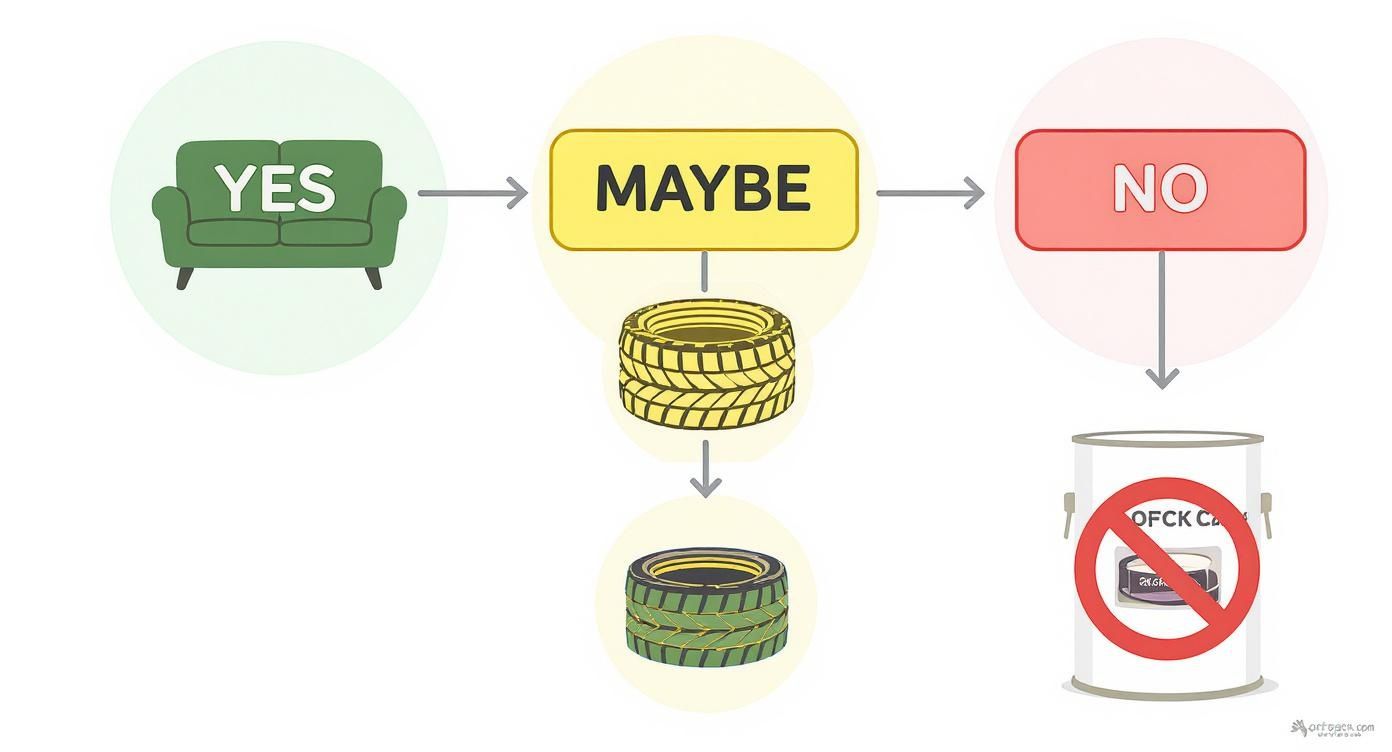
The main takeaway here is pretty simple: if it’s general junk, you’re probably in the clear. But if it has chemical or electronic parts, you need to pause and double-check.
Pro Tip: If you’re ever unsure about an item, just ask! A quick phone call to us before you toss it in can save you from the hassle of extra fees or a rejected pickup. It’s always better to be safe than sorry.
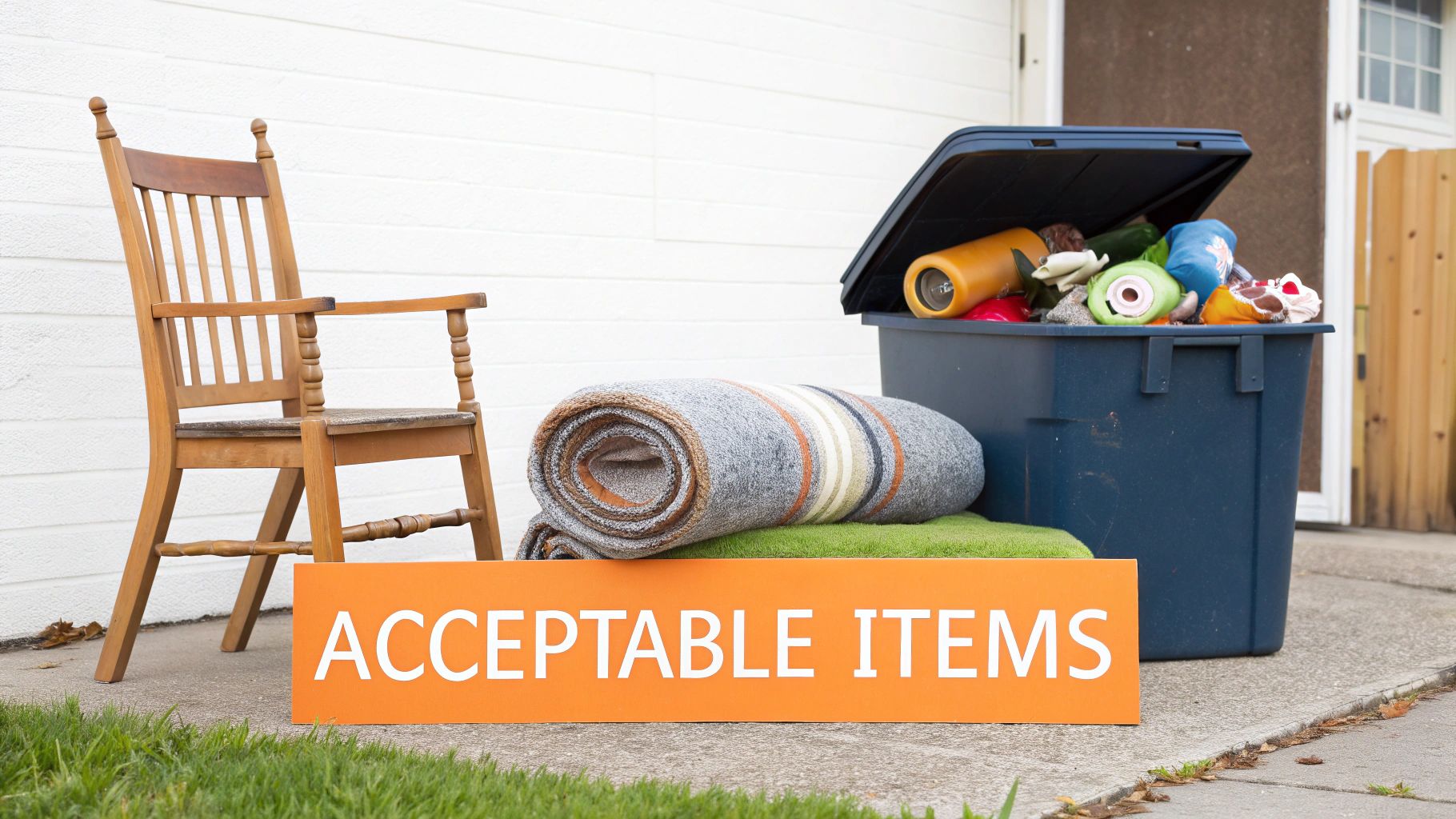
When you’re staring down a mountain of junk, a roll-off dumpster feels like your best friend. From a weekend garage purge to a full-blown home renovation, nearly every project creates a surprising amount of waste. Thankfully, the vast majority of common, non-hazardous stuff is perfectly fine to toss in.
Think about a typical household cleanout. That old sagging couch, the wobbly dining table, and those wooden chairs from the 80s can go right in. Worn-out carpets, boxes of old toys, and all the general clutter you’ve been meaning to tackle for years? That’s exactly what these dumpsters are made for, making your cleanup as simple as possible.
When it comes to renovation and construction projects, the list of approved items is just as straightforward. You can get rid of most common building materials without a second thought.
The reason these materials get the green light is that they’re considered “inert.” They’re bulky and heavy, sure, but they won’t pose an environmental threat in a landfill because they don’t contain toxic chemicals that can seep into the ground. An old wooden chair is just wood. An old refrigerator, on the other hand, contains Freon, which needs a completely different—and much more careful—disposal process.
By understanding what you can put in a dumpster, you maximize every dollar of your rental. Filling it with approved items means no surprise fees and a smooth pickup when your project is complete.
Big landscaping projects also create a lot of debris, most of which is safe for a dumpster. This includes all the organic material you’ll pull out during a major yard overhaul. While you should always check local rules, yard waste is generally accepted. If you’re planning a big outdoor cleanup, you can learn more about choosing the right dumpster size for yard waste to make sure you have enough room.
Commonly accepted yard waste includes:
Here’s the bottom line: if something isn’t hazardous, a liquid, or on a specific restricted list (like tires or electronics), you can probably toss it. Knowing this lets you focus on the real work, confident that you’re handling the disposal part correctly and efficiently.
While a dumpster is an amazing tool for getting rid of a ton of junk, it’s not a black hole where anything and everything can vanish. Some items are strictly off-limits, and for very good reasons. These rules are in place to keep waste management workers safe, protect our local environment, and stay on the right side of the law.
Think of it this way: landfills are highly engineered systems, not just giant holes in the ground. Tossing in hazardous materials can throw that entire system out of balance and cause some serious, long-lasting damage. That’s why local and federal regulations are so strict about what goes in. Things like asbestos, chemical solvents, medical waste, and old electronics can’t just be mixed in with regular trash because they need special handling. It’s a global issue, too—according to some reports, waste management contributes to about 5% of worldwide greenhouse gas emissions. You can read more about the big picture at waste-management-world.com.
When you boil it down, the reason behind most of these rules is toxicity. The items on the “prohibited” list are loaded with chemicals that can seep into the soil and contaminate groundwater, poisoning our natural resources for decades to come.
Take a single car battery, for instance. It’s full of lead and sulfuric acid, both of which are extremely toxic. If that ends up in a landfill, those chemicals can leach out and wreak havoc on the local ecosystem. The same goes for liquids like paint, motor oil, and cleaning chemicals. They’re banned because they can spill during transport or at the dump, creating a dangerous and messy situation for everyone.
Key Takeaway: Knowing what to leave out of the dumpster isn’t just about dodging extra fees. It’s about being a responsible part of the disposal process and protecting our communities and the environment.
Getting a handle on what you can’t throw away is key to a hassle-free dumpster rental. While the specifics might change a bit depending on your city, this list covers the items that are almost always forbidden. Keep an eye out for these as you clean up.
Here are the things you should never put in your roll-off dumpster:
Knowing what to keep out of the dumpster is just as important as knowing what can go in. By sorting out these prohibited items from the start, you’ll ensure your project goes off without a hitch—safely, efficiently, and without any surprise penalties.
https://www.youtube.com/embed/kbOwOWyFTzo
Tossing out old junk is one thing, but dealing with heavy debris like concrete, dirt, or brick is a whole different ballgame. These materials are seriously dense, and you’d be amazed at how quickly their weight adds up.
Even a small pile of busted-up concrete can be deceptive, easily pushing a dumpster over its weight limit. That can lead to some real safety headaches and, of course, extra fees you weren’t planning on.
For that reason, heavy debris needs a special game plan. You can’t just mix it in with your other trash. More often than not, you’ll need to rent a dumpster specifically for these heavy materials. It’s not just about managing the weight; it’s also about disposing of it the right way.
When you fill a dumpster with only one type of heavy material—say, just concrete or only dirt—we call that clean loading. This is a big deal for recycling.
A clean load of concrete, for example, can be crushed and reused as aggregate in new construction projects. It’s a much greener way to go than just burying it in a landfill.
But if you start tossing in other junk, you contaminate the whole load, and recycling is no longer an option. That’s why we have specific dumpsters just for heavy debris. You can’t throw in an old couch or bags of household trash. The entire container has to be dedicated to that single material. To make sure you get it right, it’s a good idea to figure out what size dumpster you need for the amount of heavy stuff you’ve got.
Beyond just heavy stuff, some bulky items have their own rules. They aren’t necessarily hazardous, but they demand special handling at the disposal facility, which usually means an extra fee gets passed along.
Here are a few common culprits that might add to your bill:
Plan Ahead to Avoid Surprises: The best advice I can give is to be upfront when you call to book your dumpster. Tell us about any heavy or bulky items you need to get rid of. That way, we can give you a precise quote and make sure you get the right container, helping you sidestep any unexpected costs on the final invoice.
Knowing about these special cases from the get-go is key. It keeps your project on budget, ensures you’re following local rules, and just makes the whole process run a lot more smoothly.
Ever wonder why the answer to “what can you put in a dumpster” seems to change depending on who you ask? It’s because the rules aren’t universal. What’s perfectly fine to toss in one town could be a big no-no just a few miles down the road.
Think of it like local driving laws. The basics are the same everywhere—stop at red lights, don’t speed—but specific rules about things like U-turns or parking can shift the moment you cross a county line. Waste disposal works the same way. One city might have a fantastic facility for recycling concrete, making it easy to dispose of, while the neighboring town might send all of it straight to the landfill and have stricter rules.
This is why you can’t just rely on a generic guide you found online. Before you toss a single thing, always confirm the specific rules with your local provider, like Dumpsters Now. A quick five-minute call can save you from unexpected fines and a major headache later on.
This “it depends” approach isn’t just a city-by-city thing; it reflects how different countries around the world handle their trash. Looking at the global picture really puts into perspective why the rules you encounter at home exist. Some nations are all-in on recycling, while others still lean heavily on traditional landfills.
This global context helps explain why your local rules are what they are. Every community’s regulations are a direct result of their investment in recycling facilities, their landfill capacity, and their long-term strategy for managing waste.
Here’s a snapshot of how different countries approach waste management, which directly influences what ends up being allowed in a dumpster.
Global Waste Disposal Approaches
| Country | Annual Waste per Capita (kg) | Recycling Rate | Primary Disposal Method |
|---|---|---|---|
| Germany | 632 | 47% | Recycling & Incineration |
| United States | 811 | 35% | Landfill |
| Japan | 354 | 20% | Incineration & Recycling |
| Chile | 419 | <1% | Landfill |
As you can see, a country’s priorities have a massive impact. In a place like Germany, with a high 47% recycling rate, dumpster rules are designed to force waste sorting from the start. Compare that to a country like Chile, where almost all of the 419 kilograms of waste per person ends up in a landfill, and you’ll find a completely different set of rules. For a deeper dive, check out how recycling rates vary by country on WorldPopulationReview.com.
These statistics show that a community’s ability to recycle or process certain materials is what ultimately shapes the rulebook for your dumpster rental.
So, what’s the bottom line? Your dumpster rental company is your single best guide for navigating the local maze of regulations. They’re on the front lines every day, working directly with the area landfills, transfer stations, and recycling centers. They know exactly what’s accepted, what’s rejected, and what will get you fined.
It might be tempting to sneak a few recyclables into a general waste dumpster, but doing so can contaminate entire loads and undermine your community’s recycling efforts.
Taking a moment to check first makes you a more responsible renter. You’re ensuring your debris is handled the right way, which supports local programs and keeps your project on the right side of the law. It’s a simple step that makes a big difference.
Knowing what to toss is only half the battle. How you load your dumpster can make a world of difference. It’s not just about cramming everything in; a little strategy helps you fit more, keeps the project safe, and guarantees a smooth pickup when you’re done.
Think of it like packing the trunk of a car for a road trip. You wouldn’t just toss bags in randomly. You start with the big, heavy suitcases on the bottom and work your way up. It’s the same idea with a dumpster—start by placing your heaviest materials, like chunks of concrete or dense scrap wood, across the floor first.
This simple step creates a solid, stable base. It prevents the dumpster from becoming top-heavy and dangerously unbalanced, which is a major headache (and a safety risk) when it comes time for hauling.
With your heavy foundation in place, you can start layering in the lighter, bulkier stuff. Break down old furniture, flatten every cardboard box, and fill in the gaps as you go. You’d be surprised how much extra room you can create, which could even save you from needing a bigger, more expensive dumpster.
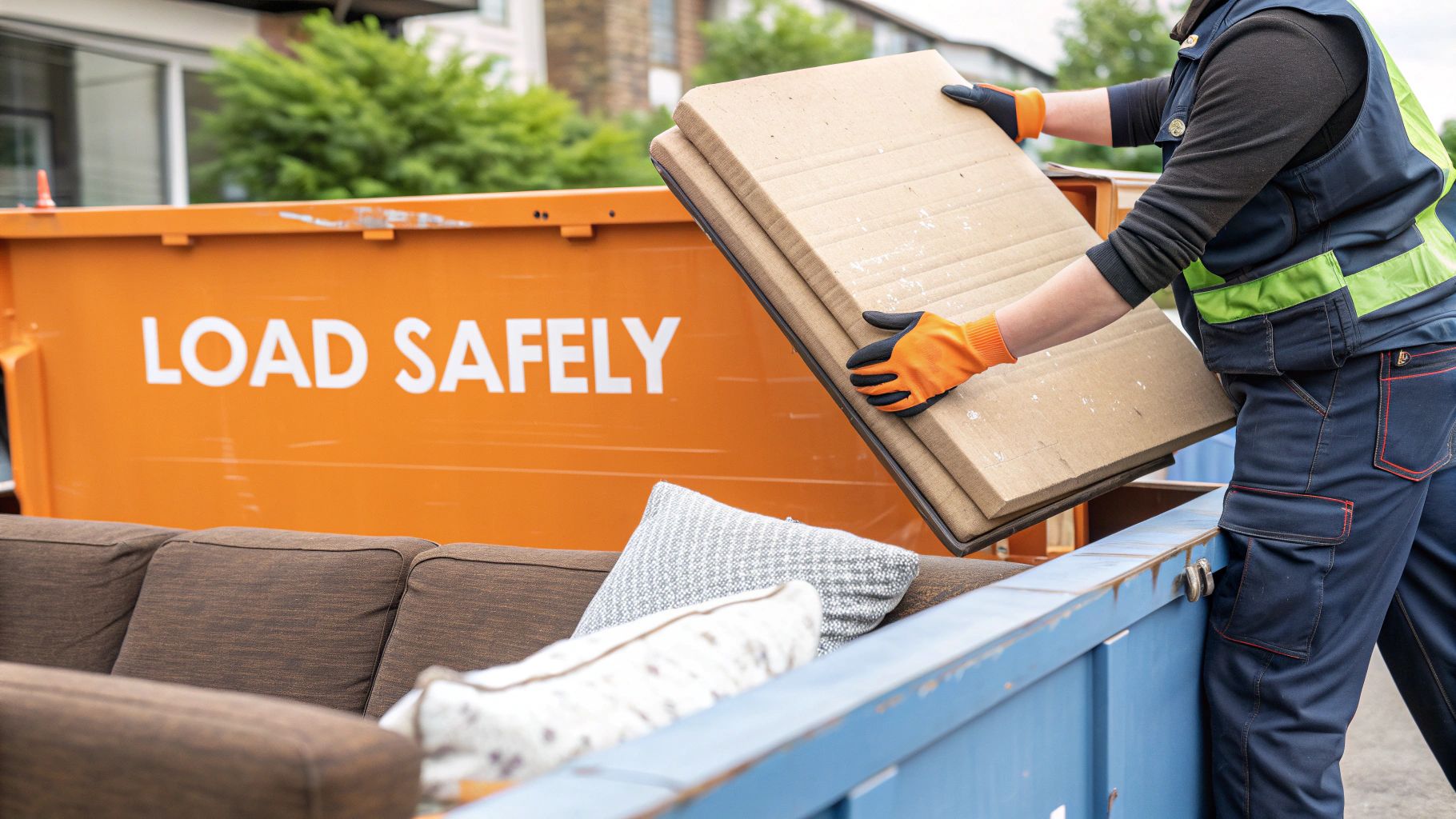
Beyond smart packing, your personal safety is what matters most. Always keep these rules in mind:
Keep in mind that how we dispose of waste is a big deal. In the United States, the average person creates around 811 kilograms of trash every single year, and much of it ends up in landfills. Loading your dumpster correctly is a small but important part of a much bigger picture. You can see more about global waste trends on sensoneo.us.
Following these simple loading tricks and safety habits will set you up for a totally hassle-free rental. You’ll get the most bang for your buck and keep your project site running smoothly from start to finish.
We’ve covered a lot of ground, but there are always a few specific questions that pop up. Here are some of the most common things people ask us, answered directly to clear up any final confusion.
That’s a definite no. Electronics, also known as e-waste, are not allowed in our dumpsters. Things like old TVs, computers, monitors, and printers contain harmful materials like lead and mercury that can leach into the soil and water if they end up in a landfill.
Your local city or county almost certainly has a special recycling program or a specific drop-off site just for these items. It’s the only safe and legal way to get rid of them.
Tossing in a forbidden item can lead to some real headaches. When the landfill or transfer station scans the load and finds something that shouldn’t be there, they hit us with a fee—and that cost gets passed on to you as additional fees.
In a worst-case scenario, the entire load could be rejected. That means the dumpster comes back to you, and you’re on the hook for the extra trip charges and the hassle of sorting everything out.
Take It From Us: It’s always cheaper and less stressful to handle restricted materials the right way from the get-go. A quick phone call to your local recycling center can save you from some serious financial penalties.
This one really comes down to local rules. Some municipalities have composting programs that require yard waste—like branches, grass clippings, and leaves—to be kept completely separate from other household trash.
The best rule of thumb is to ask us when you book. A simple clarification upfront can prevent any mix-ups or unexpected fees later on, ensuring your project goes off without a hitch.
Ready to get your project cleaned up and cleared out? Dumpsters Now is here to help with straightforward pricing and dependable service throughout Metro Detroit. You can get a quick, no-obligation quote by giving us a call or booking right online.
Yes. All of our dumpster rentals will have a hinged back door that will easily swing open.
No. Roll-off dumpster rentals do not include any type of cover or lid. We recommend using a tarp to cover the dumpster to prevent nearby residents from throwing unwanted trash in your dumpster.
The truck that carries the roll off dumpster drives onto a scale at the disposal facility where an initial weight is recorded. Next, the truck empties the contents and drives onto the scale again to record the weight of the truck and the empty dumpster. The difference between the first and second weight is the weight of the debris in the dumpster. All of our scales are regulated by the state bureau of weights and measures.
Large and bulky electronic waste items, mattresses, tires, and items containing freon may incur a per-item fee at the disposal facility. Every situation is different, so please contact us for more details.
Hazardous waste is prohibited. This includes chemical products, herbicides, pesticides, radioactive material, solvents, flammable liquids, propane tanks, motor oil, transmission oil, contaminated oils mixed with solvents, gasoline, antifreeze, petroleum contaminated soil, lead paint chips, microwaves, fluorescent tubes, medical waste, asbestos, and animals.
Contact us and let us know what you plan on using the dumpster for. We’ll let you know if any of your items are prohibited.
The price of our dumpster rentals include a one-time delivery and removal for the selected roll off dumpster, a disposal weight allowance, and the agreed upon rental period.
This depends on the size of the dumpster you rent. With that being said, the Department of Transportation regulations limit the weight of any roll off dumpster to approximately 15 tons.
Please review the applicable additional weight charges per the terms and conditions of your agreement. Contact us for more information.
Yes. If the weight of the materials in your dumpster exceeds the included weight quoted in your order confirmation, you will be charged for the additional weight. We are charged by weight at the disposal facility and we pass along this charge accordingly.
Don’t let clutter or delays hold you back. With Dumpsters Now, you get fast, reliable dumpster rentals delivered when you need them.
Call or book online today!