

Over 70 5-Star Reviews

Yes, you can compost pizza boxes—for the most part. The trick is knowing how to handle the inevitable grease and cheese residue. While the cardboard itself is a fantastic source of carbon for your compost pile, you'll need to separate the heavily soiled sections from the clean parts to keep both your compost and your recycling stream healthy.
It's a familiar scene in homes across Oakland, Wayne, and Macomb counties: the last slice is gone, and you’re left holding that big, slightly greasy cardboard box. The question always comes up: can this go in the compost? The answer is a resounding yes, but it comes with a few important ground rules.
Most pizza boxes are made from corrugated cardboard, which is the perfect "brown" material for composting. This carbon-rich ingredient is exactly what you need to balance out nitrogen-heavy "green" materials like kitchen scraps and grass clippings. The real troublemakers, though, are excessive grease, caked-on cheese, and any plastic bits left inside.
A lot of people assume that any food contact automatically condemns a pizza box to the landfill, but that's a common misconception. Big industrial composting facilities, like those that serve some Metro Detroit communities, are built to handle way more grease than a small backyard bin can. The secret is knowing what your local system accepts and prepping the box the right way.
This guide will walk you through everything you need to know. We’ll get into:
A big reason for this push toward composting is simple consumer demand. With roughly 3 billion pizza boxes used in the U.S. every year, people are looking for greener options. In fact, about 56% of customers say they prefer restaurants that use eco-friendly packaging. You can find out more about the push for sustainable pizza packaging.
Consider this your go-to resource for turning that Friday night pizza habit into a win for your garden and the environment. No more confusion—just clear, confident steps. And for businesses or homeowners in Oakland, Wayne, or Macomb County tackling large cleanouts with a lot of soiled packaging, remember that a roll-off dumpster can make managing that waste simple and effective.
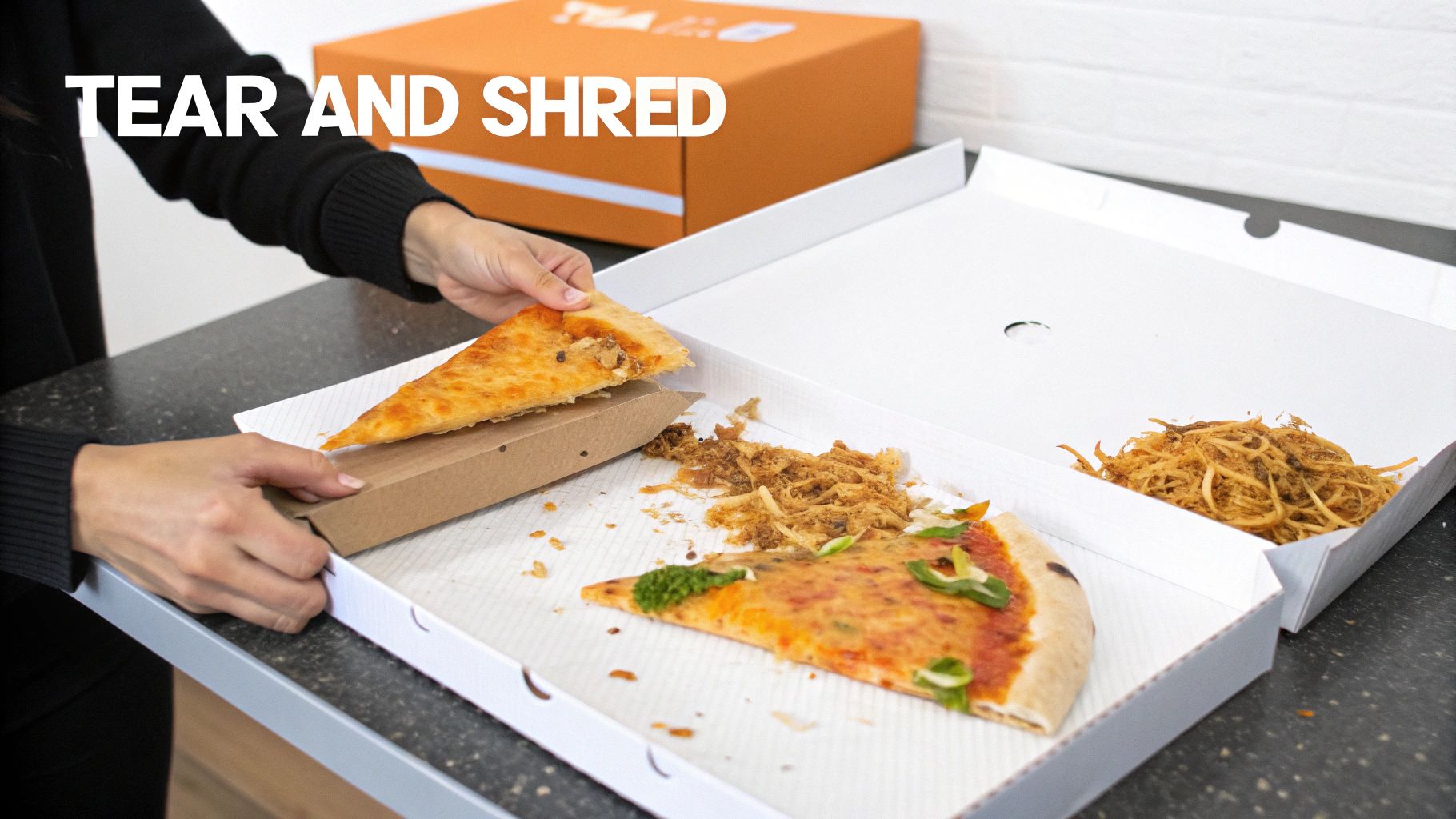
Before a pizza box can become that rich, black gold for your garden, you’ve got to do a little prep work. Just tossing the whole box into your compost pile can introduce stuff that won't break down, slowing the entire process. The real goal is to send only the good stuff—the cardboard—back to the earth.
First things first: your mission is to get all the foreign objects out of the box. That means pulling out any plastic dipping sauce containers, condiment packets, and especially that little plastic tripod in the middle (the "pizza saver"). None of these are compostable and will only contaminate your finished soil with plastic bits.
The single most effective trick for handling a pizza box is the "tear and separate" method. It’s a simple but absolutely critical step.
Take a look at the box and find the clean, dry parts—this is almost always the top lid. Rip that section off completely. This clean cardboard is perfect for your curbside recycling bin. By doing this, you’re making sure those valuable paper fibers get a second life. Pizza boxes are a huge stream of recyclable material; in the U.S., we go through about 3 billion pizza boxes a year, which adds up to a staggering 600,000 tons of corrugated cardboard. You can learn more about pizza box recycling facts from the American Forest & Paper Association.
Now you’re left with the bottom half, stained with grease and maybe a little stray cheese. This part is destined for your pizza box compost pile. All that food residue makes it a no-go for recycling, but it's perfectly fine for composting.
Key Takeaway: Start thinking of your pizza box as two different items. The clean top is a recyclable paper product. The greasy bottom is a valuable "brown" material for your compost pile. This two-pronged approach is easily the most sustainable way to deal with the box.
Once you've got the greasy section isolated, don't just chuck it into the compost bin whole. Large sheets of cardboard take forever to decompose. Worse, they can turn into a soggy, compacted mat that blocks air and water from circulating, suffocating all the beneficial microbes that do the hard work in your pile.
To speed things up, tear the cardboard into small pieces, ideally no bigger than your hand. If you happen to have a shredder that can handle corrugated cardboard, even better. The smaller the pieces, the more surface area you create for microorganisms and moisture to work their magic, which drastically accelerates the breakdown process.
This step is especially important for smaller setups like worm bins (vermicomposting). Worms can get easily overwhelmed by large, dense chunks of material. A little prep work ensures your pizza box integrates seamlessly into your compost, turning what was once waste into a fantastic resource.
Once you've prepped your pizza box, you've got to decide where it's going. The right composting system really depends on where you live, what services are available, and just how much work you want to put in. Each method has its own quirks for turning greasy cardboard into black gold for your garden.
For a lot of folks with a yard, a classic backyard compost pile is the easiest way to go. This is where your shredded pizza box really shines, acting as a "brown" material. You need these carbon-heavy browns to balance out your "green" stuff—think nitrogen-rich kitchen scraps and coffee grounds.
Picture your compost pile as a kind of lasagna. You need to alternate layers of brown and green materials to get the decomposition process cooking. Tossing in shredded pizza box pieces helps keep the pile from turning into a dense, soggy, smelly mess by adding air pockets and soaking up extra moisture. A healthy pile needs to breathe.
A well-tended backyard pile is a fantastic way to deal with pizza box waste, breaking it down right alongside leaves and grass clippings. If you’re already cleaning up the yard, you'll find that leaves are the perfect partner for cardboard in a compost bin. We have a whole guide on how to dispose of leaves that can help you get the mix just right.
To make it work, keep these points in mind:
Got less space to work with? A worm bin, or vermicomposting system, is an amazing option. The worms in these setups are eating machines, but they can be a little particular. They'll absolutely devour cardboard, but you need to serve it up just right.
Shred the pizza box into super-fine strips or, even better, soak it in water and tear it into a pulp. This makes it way easier for the worms to digest. It's also critical to add the cardboard slowly. Dumping a whole box in at once can overwhelm the bin, creating dry spots or messing with the pH balance. A little bit at a time makes for perfect bedding.
Pro Tip: When you're adding pizza box bits to your worm bin, mix them with some damp, shredded newspaper or coconut coir. This combo creates a fluffy, breathable home that worms absolutely thrive in and stops the cardboard from packing down into a dense, solid mat.
If you live in a place with a municipal composting service, like some communities in Oakland and Macomb County, this is usually the most straightforward path. These big, industrial facilities get much hotter than any backyard pile. That intense heat means they can break down materials faster and more completely, making short work of the grease and leftover cheese on a pizza box.
Before you toss anything in, always check your local guidelines. Not every city or township accepts food-soiled paper. But if they do, you can often just throw the entire prepped (and ideally torn-up) box right into your curbside compost bin without worrying about separating the greasy parts.
https://www.youtube.com/embed/q0_Pwa9YFjw
The big debate over the pizza box: does it belong in the recycling bin or the compost pile? For years, the answer was a bit murky. While the paper industry has gotten more lenient about minor grease stains on cardboard, the real answer comes down to one thing: your local waste management rules.
Policies can vary wildly from one town to the next. A recycling facility in Wayne County might have totally different contamination standards than one serving Macomb or Oakland County. And those local guidelines are the law of the land, because a single greasy box can ruin an entire batch of otherwise perfectly good recyclables. That's where a hybrid approach isn't just smart—it's the most responsible strategy.
Instead of forcing an either/or decision, the best practice is to use both bins. It's as simple as tearing the box in two.
The clean, grease-free top half can go straight into your curbside recycling bin. This move ensures those valuable cardboard fibers get a second life. If you need specifics on local programs, our guide covers where to recycle cardboard right here in the Metro Detroit area.
Then you've got the bottom half, the part that did all the heavy lifting with cheese and grease. This section is a perfect "brown" material for your pizza box compost pile, providing the carbon your compost needs to thrive.
This decision tree gives you a great visual for where your pizza box can go.
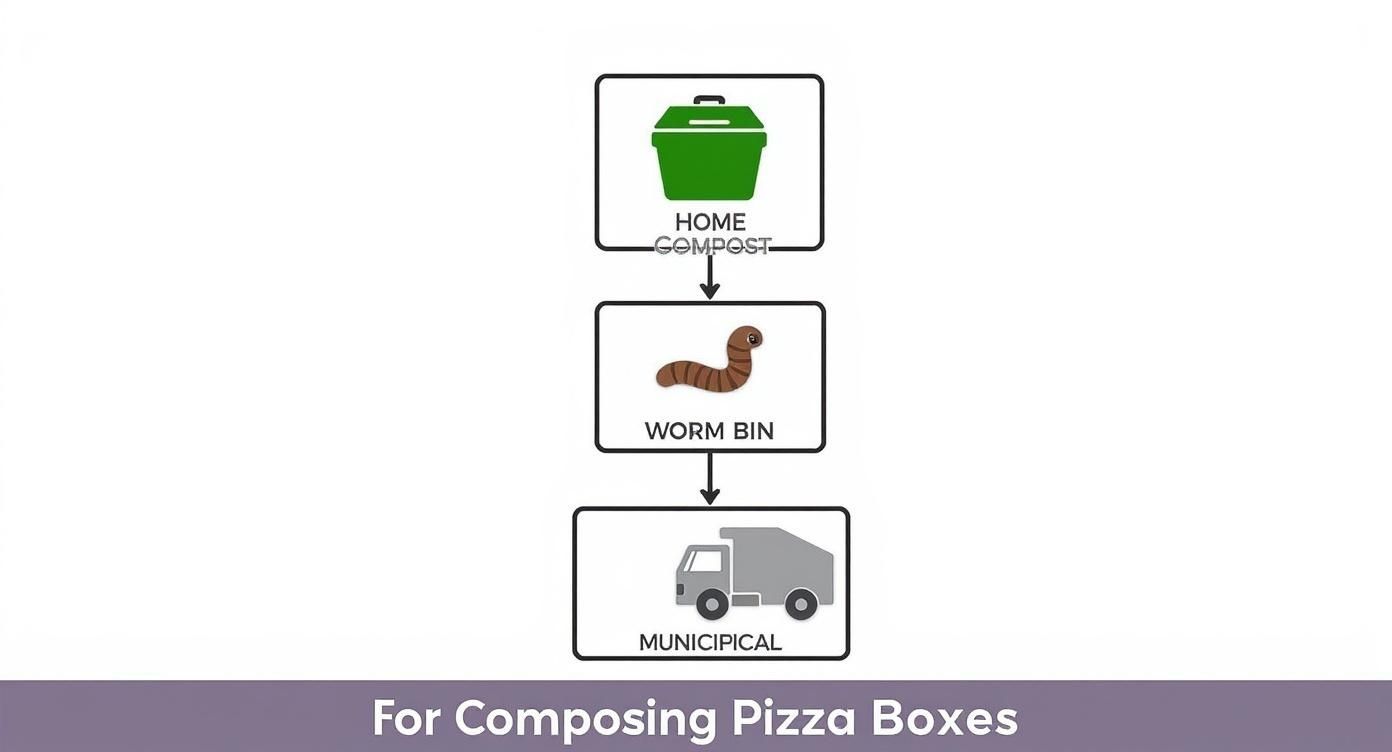
As you can see, whether you're using a backyard bin, a worm farm, or a city service, there's a composting path for the soiled parts of your box.
This simple act of separating the box respects both waste streams. You avoid contamination on the recycling side while feeding your compost on the other. It's a small habit that makes a real environmental difference. Interestingly, even with pizza being a national favorite, shifting consumer habits have led to a drop in pizza box demand since 2020. You can read more about these market shifts from RaboResearch.
When in doubt, throw it out—of the recycling bin. It's always better to send a questionable item to the compost or trash than to risk contaminating a whole truckload of clean recyclables.
For businesses or homeowners in Macomb, Oakland, or Wayne County staring down a massive cleanout with lots of mixed waste, especially soiled packaging, a roll-off dumpster offers a clean solution. It lets you consolidate all the non-recyclable stuff in one go without messing up your regular recycling routine.
Making the right choice for your pizza box depends on your local rules and personal setup. This table breaks down the pros and cons of each method to help you decide.
| Method | Pros | Cons |
|---|---|---|
| Composting | Enriches soil with valuable carbon. Keeps waste out of landfills. Reduces greenhouse gas emissions. | Requires a compost system (bin, pile, or service). Not all municipalities offer food-soiled paper composting. |
| Recycling | Conserves natural resources by reusing cardboard fibers. Reduces energy consumption compared to making new cardboard. | Only clean, grease-free portions are accepted. Risk of contaminating entire recycling batches if done incorrectly. |
| Trashing | Easiest and fastest option, requiring no sorting. Avoids any risk of recycling contamination. | Contributes to landfill waste. The valuable cardboard and organic material are lost forever. |
Ultimately, the hybrid approach of recycling the clean top and composting the greasy bottom is the most sustainable choice. It maximizes resource recovery while minimizing landfill waste. When composting isn't an option, recycling the clean part and trashing the rest is the next best thing.
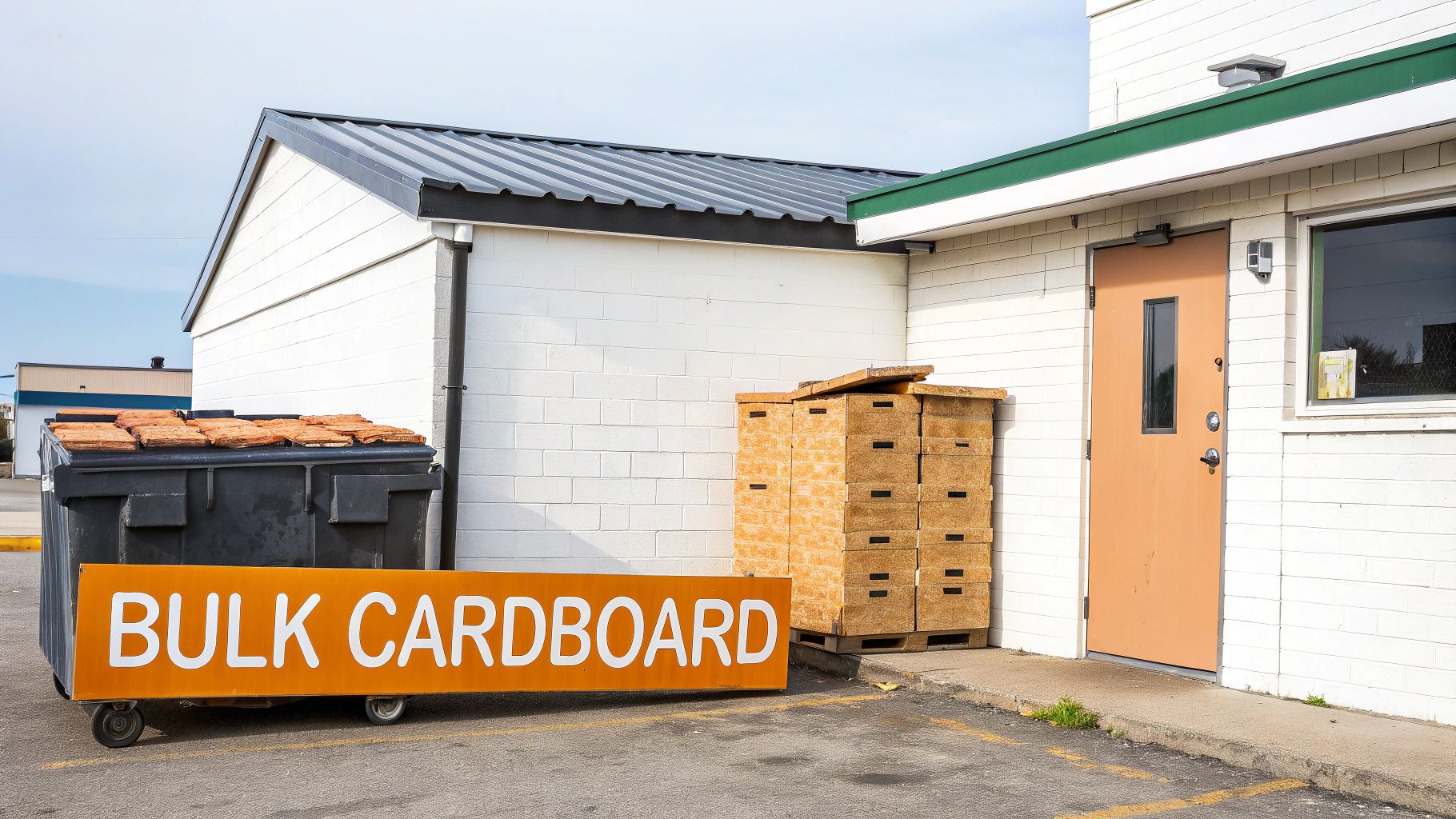
While homeowners can usually manage a few pizza boxes with their regular bins, businesses face a totally different beast. A popular pizzeria in Oakland County or a busy event venue in Macomb can generate a mountain of soiled cardboard in a single weekend. This is where standard curbside or small commercial dumpsters just don't cut it.
For commercial operations, dealing with this much food-soiled packaging isn't just a logistics puzzle—it's about staying clean, efficient, and compliant. Jamming hundreds of greasy boxes into a standard front-load commercial dumpster is a recipe for overflowing bins, unhappy pests, and even potential fines. Worse, it contaminates your entire recycling stream, turning valuable materials into landfill trash.
This is exactly why a roll-off dumpster is a game-changer. Unlike the standard front-load dumpster that gets emptied on a set schedule, a roll-off is a large, open-top container delivered on demand for a specific job or waste type. For a business drowning in cardboard, it creates a dedicated space just for that soiled packaging.
Separation is everything. By tossing all the food-contaminated boxes into the roll-off, a business keeps its regular recycling container clean. This ensures that the clean cardboard, glass, and plastic they generate can actually be recycled, supporting their sustainability goals. You can get into the nitty-gritty of this container style in our guide that explains in detail what a roll-off dumpster is.
For a restaurant, event space, or catering company in the Metro Detroit area, a roll-off dumpster simplifies everything. It centralizes the disposal of challenging materials, making cleanup faster for staff and ensuring your waste area remains orderly and compliant with local health codes.
Picture a popular pizza joint in Wayne County after a big game night. Instead of your crew struggling to break down and cram hundreds of greasy boxes into an overflowing bin, they can just toss them straight into a waiting roll-off. The regular waste area stays clear, and contamination becomes a non-issue.
Think about these common situations where a roll-off dumpster is the perfect solution:
Ultimately, a roll-off dumpster is the bridge for businesses that produce too much soiled material for standard bins but still want to run a clean and effective recycling program. It’s a practical, no-nonsense tool for responsible waste handling, letting you focus on running your business, not managing its overflow.
Even with the best guidelines, there are always a few tricky questions that come up when you're staring at an empty pizza box. Getting the details right is a small step that makes a huge difference for your local recycling program and your compost pile. Let's clear up some of the most common questions we hear.
The short answer is almost always no. While some modern paper mills claim their equipment can handle a bit of grease, the reality is that most local recycling programs—including many here in the Metro Detroit area—will reject a greasy box. One contaminated box can ruin an entire batch of otherwise clean cardboard, forcing everything to go to the landfill.
The best practice is simple: tear the box in two. The clean, grease-free top half can go right into your recycling bin. The greasy bottom half is perfect for your pizza box compost pile, or if you're not composting, it should go in the trash.
That little plastic "pizza saver" will not break down in your compost. Ever. You could come back a year later to harvest your rich, finished compost, and that piece of plastic will be sitting there looking just like it did on pizza night.
This contaminates your hard-earned soil with plastic, which isn't good for your plants or the environment. The same goes for any plastic dipping sauce containers or waxy parchment paper liners left inside. Always give the box a quick once-over and pull out any non-cardboard items before you tear it up.
Why choose? The smartest approach is to do both. A hybrid strategy is easily the most eco-friendly way to deal with a pizza box, ensuring you get the most value out of the materials and keep waste out of the landfill.
Here’s how it works:
By treating the box as two separate pieces, you're supporting both the circular economy of recycling and the natural cycle of composting.
Key Insight: This two-part method isn't just a suggestion; it's the most responsible way to handle it. You prevent contamination at the recycling facility and create a valuable resource for your garden, turning one piece of trash into two useful materials.
For any business churning out a high volume of soiled cardboard—think a pizzeria in Oakland County or an event venue in Wayne—a standard commercial bin just won't cut it. They fill up way too fast, leading to a messy, inefficient, and often overflowing waste area.
The most practical solution is a roll-off dumpster. This gives you a single, dedicated container for all your non-recyclable, food-soiled packaging. It keeps your regular recycling stream clean, your disposal area tidy, and ensures you can handle the rush from a busy weekend or a big catering event without a problem.
For any project, big or small, that generates more waste than your bins can handle, Dumpsters Now has you covered. From restaurant cleanouts to home renovations across Metro Detroit, our reliable roll-off dumpster service makes waste management simple. Get your project started with a quick quote at https://dumpstersnow.com.
Yes. All of our dumpster rentals will have a hinged back door that will easily swing open.
No. Roll-off dumpster rentals do not include any type of cover or lid. We recommend using a tarp to cover the dumpster to prevent nearby residents from throwing unwanted trash in your dumpster.
The truck that carries the roll off dumpster drives onto a scale at the disposal facility where an initial weight is recorded. Next, the truck empties the contents and drives onto the scale again to record the weight of the truck and the empty dumpster. The difference between the first and second weight is the weight of the debris in the dumpster. All of our scales are regulated by the state bureau of weights and measures.
Large and bulky electronic waste items, mattresses, tires, and items containing freon may incur a per-item fee at the disposal facility. Every situation is different, so please contact us for more details.
Hazardous waste is prohibited. This includes chemical products, herbicides, pesticides, radioactive material, solvents, flammable liquids, propane tanks, motor oil, transmission oil, contaminated oils mixed with solvents, gasoline, antifreeze, petroleum contaminated soil, lead paint chips, microwaves, fluorescent tubes, medical waste, asbestos, and animals.
Contact us and let us know what you plan on using the dumpster for. We’ll let you know if any of your items are prohibited.
The price of our dumpster rentals include a one-time delivery and removal for the selected roll off dumpster, a disposal weight allowance, and the agreed upon rental period.
This depends on the size of the dumpster you rent. With that being said, the Department of Transportation regulations limit the weight of any roll off dumpster to approximately 15 tons.
Please review the applicable additional weight charges per the terms and conditions of your agreement. Contact us for more information.
Yes. If the weight of the materials in your dumpster exceeds the included weight quoted in your order confirmation, you will be charged for the additional weight. We are charged by weight at the disposal facility and we pass along this charge accordingly.
Don’t let clutter or delays hold you back. With Dumpsters Now, you get fast, reliable dumpster rentals delivered when you need them.
Call or book online today!