

Over 70 5-Star Reviews

When you're getting ready to tackle a project in Metro Detroit, whether it's a backyard makeover in Macomb County or a full-scale renovation in Oakland County, getting the measurements right is everything. So, let’s cut to the chase: one cubic yard is exactly 27 cubic feet.
This simple conversion is the bedrock for figuring out just about anything related to volume, from ordering topsoil to renting the right roll-off dumpster for your next big job.
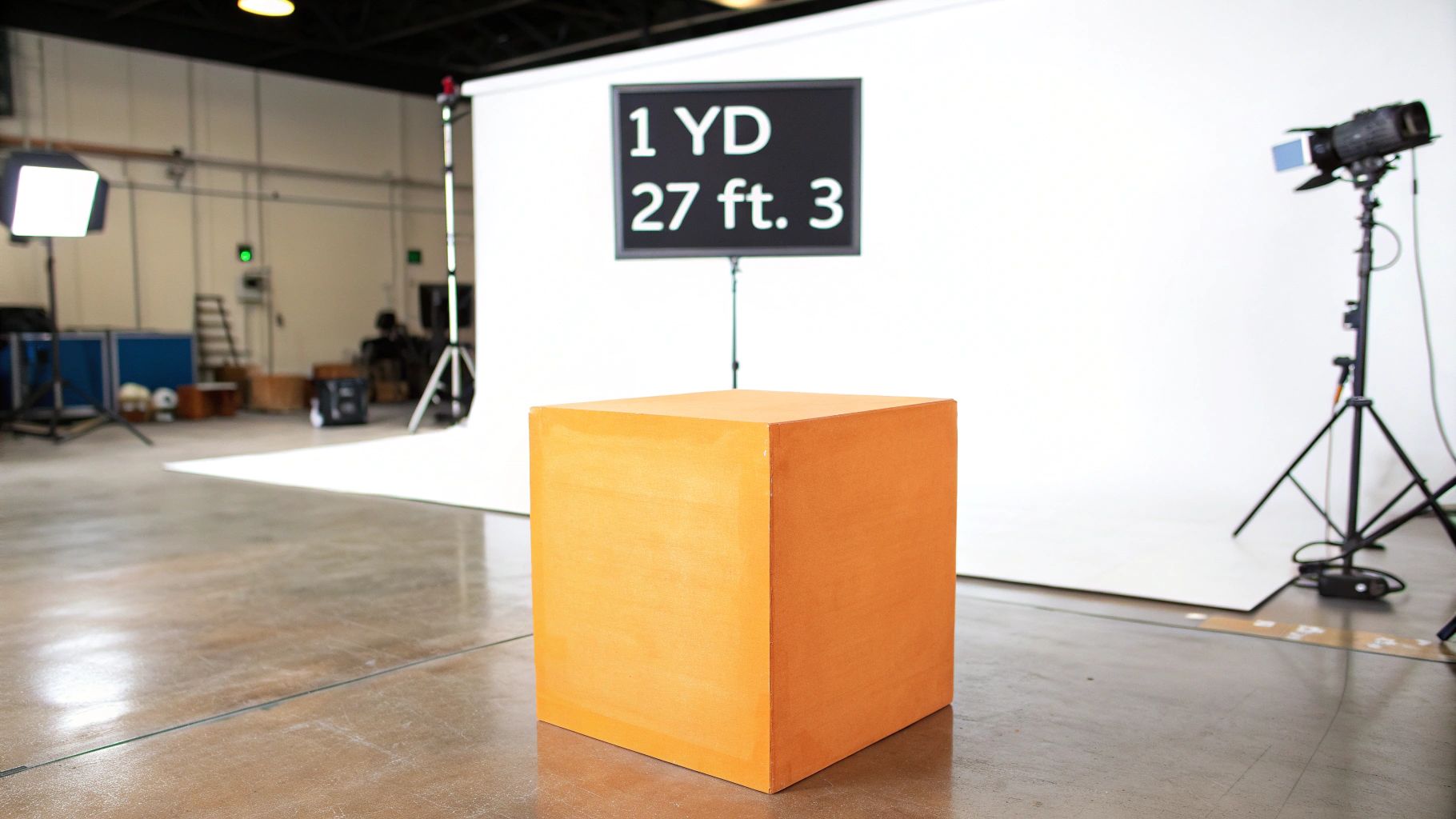
This isn't some random number pulled out of thin air; it’s the essential math for any project that deals with three-dimensional space. The easiest way to picture it is to think of a perfect cube.
Imagine a box that is one yard long, one yard wide, and one yard deep. Since one yard is the same as three feet, you just multiply the dimensions in feet to find the volume: 3 ft x 3 ft x 3 ft, which equals a neat 27 cubic feet.
This conversion is a fixed standard, a foundational piece of the imperial measurement system we use every day. You can learn more about this foundational conversion on inchcalculator.com if you want to dig deeper into the math.
Understanding this simple equation is absolutely crucial when you’re looking to rent a roll-off dumpster in Oakland, Wayne, or Macomb County. It helps you accurately visualize the space you’re actually getting, ensuring you pick the right size for your specific needs—whether it’s for a small garage cleanout in Sterling Heights or a major construction site in Detroit.
To help you get a better feel for how this math scales up for real-world projects, we’ve put together a handy reference table. It shows the conversion for the most common roll-off dumpster sizes we offer at Dumpsters Now.
Here's a look at how cubic yards translate into cubic feet for our standard roll-off containers:
| Cubic Yards (yd³) | Cubic Feet (ft³) |
|---|---|
| 10 yd³ | 270 ft³ |
| 15 yd³ | 405 ft³ |
| 20 yd³ | 540 ft³ |
| 30 yd³ | 810 ft³ |
| 40 yd³ | 1080 ft³ |
As you can see, the numbers get big fast! This chart should give you a much clearer picture of the volume you're working with when you're deciding between a 10-yard dumpster for a small project or a 40-yarder for a massive one.
Ever notice how you rent a 20-yard roll-off dumpster, not a 540 cubic foot one? It might seem like a small detail, but it’s all about keeping things simple and practical. Using cubic yards is the industry standard because it gives everyone a clear, manageable number to work with for large amounts of debris.
Think of it like measuring a road trip in miles instead of inches. Both are technically correct, but one is a whole lot more useful for grasping the scale of the journey. For the big jobs—like a construction project in Warren or a massive home cleanout in Livonia—cubic yards provide a universal unit of measurement that everyone understands.
This standardized system makes sure you, your contractor, and the dumpster company are all speaking the same language. When you call for a quote for your Wayne County project, talking in cubic yards simplifies the conversation. You can easily compare sizes and prices without getting bogged down in huge, clunky numbers. If you want to dive deeper, you can learn more about what a roll-off dumpster is and see how they’re designed specifically for these large-scale projects.
This isn’t some new trend, either. The cubic yard has been the go-to unit for bulk materials in construction and infrastructure for a very long time.
Historically, the cubic yard became the preferred unit for contracts, bids, and material sales way back in the 19th and 20th centuries. Because it represents a much larger volume—27 times that of a cubic foot—it was essential for managing the massive scale of early construction and mining projects.
At the end of the day, this system is designed for the real-world scale of projects that need a roll-off dumpster. It cuts through the confusion and makes the entire rental process more straightforward, whether you're a seasoned contractor or a first-time homeowner.
By sticking to cubic yards, the waste management industry has created an efficient shorthand that helps you:
This simple choice of measurement helps keep your project on track before the roll-off dumpster even arrives.
Let's be honest, abstract numbers like ‘270 cubic feet’ don't mean much to most people. While knowing that 1 cubic yard equals 27 cubic feet is technically correct, what really matters is picturing that space sitting in your driveway. Let's make these measurements real so you can pick the right roll-off dumpster with confidence.
A common starting point for many jobs is our 10-yard roll-off dumpster. This container holds exactly 270 cubic feet of material. To put that in perspective, think about a standard contractor-style wheelbarrow. You'd need to fill and dump it between 40 and 50 times to reach the top. This simple comparison is a game-changer for homeowners in Oakland County planning a small renovation or a major yard cleanup.
As your project gets bigger, so do the comparisons. If you jump up to a 20-yard roll-off dumpster, you're doubling your space to 540 cubic feet. A great way to visualize this is to picture a standard single-car garage. A 20-yard container can hold roughly the entire volume of that space, which is why it's a go-to for larger remodeling jobs or whole-house cleanouts.
These real-world examples are crucial, whether you're a contractor in Wayne County estimating debris for a job site or a family in Macomb County clearing out an estate. They turn abstract math into practical, relatable sizes.
This chart helps show why certain units of measurement are chosen for specific jobs—just like using cubic yards for roll-off dumpsters makes the most sense for large volumes.
This visual just reinforces why using the right unit—like cubic yards for big piles of debris—makes everything easier to wrap your head around. By translating cubic yards and feet into familiar objects, you can make a much smarter decision.
The goal is to move beyond the numbers and see the space. Visualizing a roll-off dumpster's capacity in terms of wheelbarrows, pickup trucks, or even garage sizes empowers you to select a container that perfectly matches your project's scale.
This practical approach helps you sidestep the common mistakes people make when renting a roll-off dumpster. Ordering one that’s too small means surprise costs and delays. Order one that’s too big, and you’ve just paid for empty space. By mastering these simple visualizations, you can nail it the first time, saving both time and money on your project.
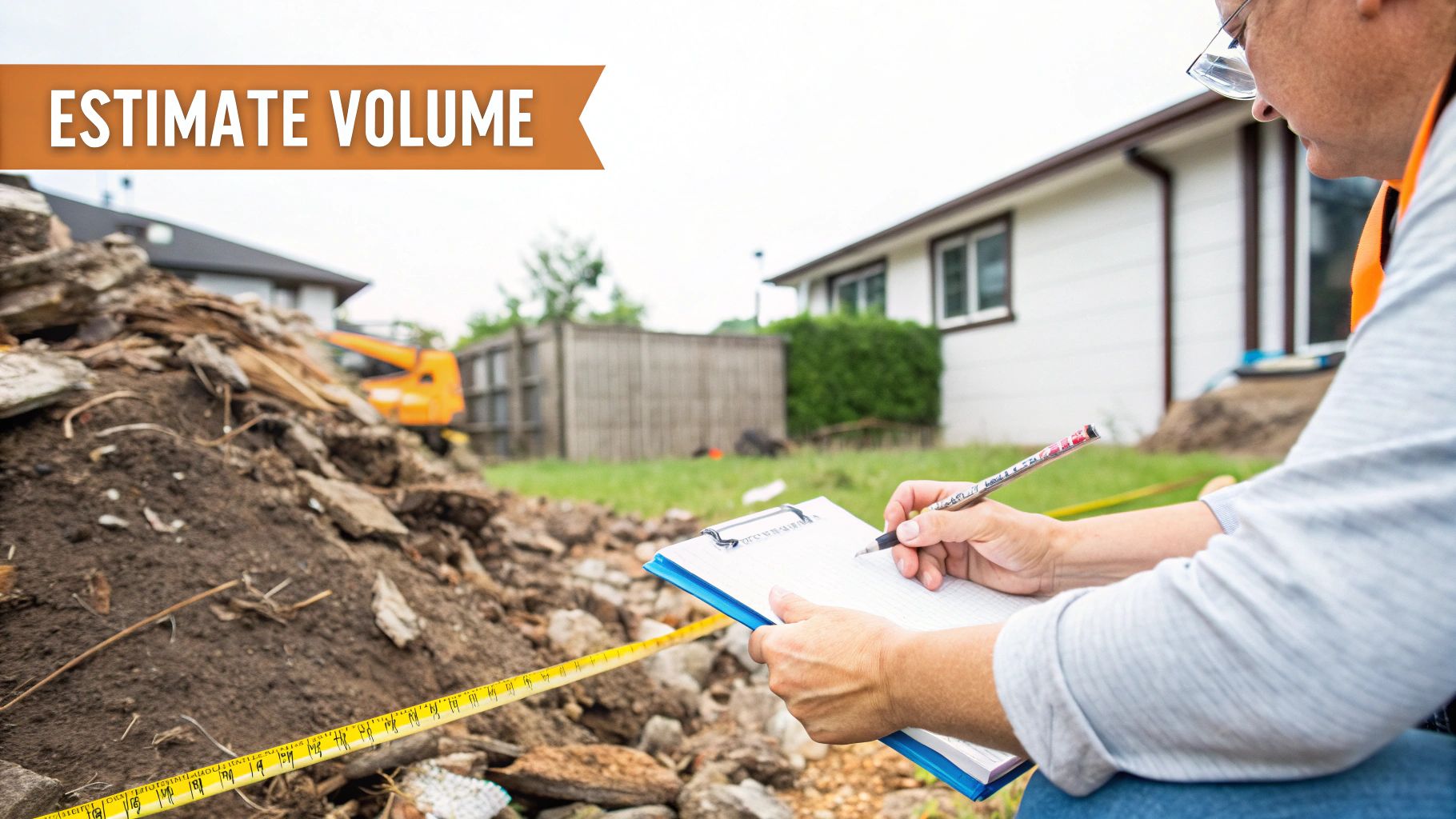
Trying to eyeball a mountain of junk and guess the right roll-off dumpster size can feel like a shot in the dark. But getting it right isn't about guesswork; it's about a few simple measurements. You don’t need any fancy equipment—just a tape measure, a calculator, and a few minutes of your time.
First things first, wrangle all that debris into a single, somewhat organized pile. A rough rectangular or boxy shape works best. Trying to measure scattered junk is a recipe for frustration and inaccuracy. Once it’s all in one spot, you’re ready to get some real numbers.
To figure out exactly how much stuff you have, we’re going back to basics with the classic formula for volume: Length x Width x Height. Grab your tape measure and get these three dimensions in feet.
Let's say you just finished tearing down an old deck at your house in Troy. You've got a pile of splintered wood and old hardware that measures:
Just multiply those numbers together: 10 x 6 x 3 = 180 cubic feet. Boom. Now you have a solid, real-world number to work with, not just a vague guess.
You've got your total in cubic feet, but the roll-off dumpster world runs on cubic yards. The conversion is super simple. Just remember this key number: 27.
1 cubic yard = 27 cubic feet
All you have to do is divide your total cubic feet by 27 to get the cubic yards you need.
For our deck demolition project: 180 cubic feet ÷ 27 = 6.67 cubic yards.
This tells you that you need a dumpster that can hold at least 6.67 cubic yards. In this case, a 10-yard roll-off dumpster from Dumpsters Now is the perfect fit. You'll have plenty of space without overpaying for a giant container you won't fill.
One last pro tip: always account for the "fluff factor." Broken-up materials have tons of air pockets, making them take up more space than you'd think. It's smart to add about 20% to your final number just to be safe. This little bit of buffer ensures you won't be stuck with a full dumpster and more debris to haul.
To make it even easier, we've put together a quick cheat sheet. This table matches our most common roll-off dumpster sizes with the types of projects they're perfect for in the Metro Detroit area.
| Dumpster Size (Yards) | Equivalent Cubic Feet | Best For Projects Like… |
|---|---|---|
| 10 Yard | 270 cubic feet | Small bathroom remodels, single-room cleanouts, yard waste. |
| 20 Yard | 540 cubic feet | Kitchen demolition, large garage cleanouts, flooring removal. |
| 30 Yard | 810 cubic feet | Whole-home cleanouts, large construction jobs, siding replacement. |
| 40 Yard | 1080 cubic feet | Major new construction, large-scale demolitions, commercial jobs. |
Hopefully, this gives you a clearer picture of what you might need. For an even more detailed breakdown, check out our complete guide on what size dumpster you might need.
Getting your debris estimate right is about more than just numbers—it hits your wallet and project timeline directly. If you underestimate your needs for a Macomb County cleanout, you’ll be stuck with the extra cost and annoying delay of ordering a second roll-off dumpster.
On the flip side, overestimating means you’ve paid for empty space you didn't even use. A quick, accurate calculation ensures you rent the perfect size roll-off dumpster the first time, every time.
Miscalculating doesn't just sting on small projects; the financial hit gets much bigger on commercial or industrial jobs. Understanding that 1 cubic yard equals 27 cubic feet is the key. This simple conversion helps companies manage everything from loading shipping containers efficiently to estimating transport emissions.
Think about it: a 40-yard soil delivery isn't just a big pile of dirt. It's 1,080 cubic feet of material. That number is absolutely critical for calculating freight costs and environmental impact, something the EPA tracks closely.
An accurate debris calculation saves you money, prevents project disruptions, and promotes more efficient waste management. It's a win for both your budget and the local environment here in Metro Detroit.
Ultimately, taking a few minutes to measure your debris pile prevents the logistical headaches that can completely derail your schedule. A successful project always starts with good planning. That’s why we put together a guide on how to plan your home renovation to help you get started on the right foot.
Got a few lingering questions about roll-off dumpsters and how to eyeball your debris? We hear these all the time from our customers in Oakland, Wayne, and Macomb counties. Let’s clear up the final details so you can feel confident you’re grabbing the right size for the job.
How do I calculate cubic feet for an uneven pile of debris?
Don't break out the graphing paper just yet. For a lumpy, uneven pile, just estimate the average length, width, and height. Take a look at the longest, widest, and tallest points, then make a conservative guess for the average of each.
Multiply those three numbers, and you've got a solid estimate of your cubic footage. When in doubt, it’s always better to round up. A little extra space in your roll-off dumpster is a much better problem to have than not enough.
Does one cubic yard of concrete weigh the same as one cubic yard of wood?
Not even close. This is a big one that catches people by surprise. A cubic yard is all about volume—how much space something takes up—not how much it weighs.
One cubic yard of something dense like concrete or dirt is going to be incredibly heavy compared to a cubic yard of lighter stuff like broken-up wood or old furniture. That’s exactly why heavy materials often need their own special roll-off dumpster; it helps keep the truck within legal road weight limits. While other dumpsters might have weight restrictions, roll-off containers are built to handle these heavy loads, though limits still apply.
It’s critical to understand the difference between volume and weight. A 20-yard roll-off dumpster can hold 20 cubic yards of anything, but filling it to the brim with concrete would make it far too heavy to legally haul on Michigan roads.
What is the fluff factor and why does it matter?
The "fluff factor" is a simple idea with a big impact. It’s about how materials expand once you break them apart. A solid, flat wall might not seem like much, but once you tear it down, all those pieces of drywall and splintered studs create a lot of empty air pockets between them.
That "fluff" takes up way more space in a roll-off dumpster than you'd think. As a rule of thumb, add 20-50% to your initial volume estimate just to account for this. It’s the best way to avoid the dreaded "ran out of room" moment.
Can I mix different types of debris in one roll-off dumpster?
Usually, yes. For most projects, you can toss general construction debris, household junk, and yard waste together in a standard roll-off dumpster without any issue.
The main exception is for very heavy, clean materials like concrete, asphalt, or pure dirt. These often need a dedicated ‘clean load’ roll-off dumpster. And of course, hazardous materials are never allowed. If you have any doubts, just ask us—we’ll give you the specific guidelines for projects in Oakland, Wayne, or Macomb County.
Ready to get your project started with the perfect roll-off dumpster? The team at Dumpsters Now is here to help you nail the right size with fast, friendly service across Metro Detroit. Get your free quote and book your delivery today by visiting https://dumpstersnow.com.
Yes. All of our dumpster rentals will have a hinged back door that will easily swing open.
No. Roll-off dumpster rentals do not include any type of cover or lid. We recommend using a tarp to cover the dumpster to prevent nearby residents from throwing unwanted trash in your dumpster.
The truck that carries the roll off dumpster drives onto a scale at the disposal facility where an initial weight is recorded. Next, the truck empties the contents and drives onto the scale again to record the weight of the truck and the empty dumpster. The difference between the first and second weight is the weight of the debris in the dumpster. All of our scales are regulated by the state bureau of weights and measures.
Large and bulky electronic waste items, mattresses, tires, and items containing freon may incur a per-item fee at the disposal facility. Every situation is different, so please contact us for more details.
Hazardous waste is prohibited. This includes chemical products, herbicides, pesticides, radioactive material, solvents, flammable liquids, propane tanks, motor oil, transmission oil, contaminated oils mixed with solvents, gasoline, antifreeze, petroleum contaminated soil, lead paint chips, microwaves, fluorescent tubes, medical waste, asbestos, and animals.
Contact us and let us know what you plan on using the dumpster for. We’ll let you know if any of your items are prohibited.
The price of our dumpster rentals include a one-time delivery and removal for the selected roll off dumpster, a disposal weight allowance, and the agreed upon rental period.
This depends on the size of the dumpster you rent. With that being said, the Department of Transportation regulations limit the weight of any roll off dumpster to approximately 15 tons.
Please review the applicable additional weight charges per the terms and conditions of your agreement. Contact us for more information.
Yes. If the weight of the materials in your dumpster exceeds the included weight quoted in your order confirmation, you will be charged for the additional weight. We are charged by weight at the disposal facility and we pass along this charge accordingly.
Don’t let clutter or delays hold you back. With Dumpsters Now, you get fast, reliable dumpster rentals delivered when you need them.
Call or book online today!