

Over 70 5-Star Reviews

If you've got a project that's too big for endless trips to the dump but doesn't quite require a colossal container, the 20 yard dumpster is your sweet spot. Think of it as the perfect middle-ground solution—spacious enough for serious work, yet compact enough to fit comfortably in most residential driveways across Metro Detroit.
This versatile roll-off dumpster can hold roughly six standard pickup truck loads of debris. That capacity makes it a favorite for homeowners in Oakland County tackling major cleanouts and contractors in Wayne and Macomb County managing renovation projects. It hits the mark when a smaller dumpster just won't cut it, but a massive 30 or 40-yarder would be overkill.
When we talk about a "20 yard dumpster," we're referring to a specific kind of container called a roll-off dumpster. These are the heavy-duty, rectangular steel bins you see at construction sites and home renovation projects all over Metro Detroit, from Troy to Sterling Heights.
Unlike the smaller, lidded dumpsters you might find behind a business, a roll-off is delivered by a specialized truck that literally "rolls" it off its back into place. This design makes for a pretty straightforward and efficient delivery right where you need it.
The name "20 yard" points directly to its volume—it can hold 20 cubic yards of material. Trying to picture that can be tough, which is why the pickup truck analogy works so well. Instead of making six separate, fuel-burning trips to the landfill, you can toss everything into one convenient container. It's a massive time and hassle saver.
A typical 20 yard roll-off dumpster measures about 22 feet long, 7.5 feet wide, and 4.5 feet high. While these numbers can have slight variations, the length is the main thing you need to plan for. You’ll need a clear, flat, and solid surface with at least that much length, plus some extra wiggle room for the delivery truck to maneuver.
That footprint is what makes it such a great fit for most driveways in communities from Oakland to Macomb County. Keeping the container on your own property means you can often skip the hassle of getting a street permit. The 4.5-foot wall height is another key feature—it's low enough that you can easily load debris over the sides without a major struggle.
The Bottom Line: The 20 yard roll-off dumpster's dimensions strike the perfect balance. It’s big enough to handle all the debris from a full kitchen remodel or a massive garage cleanout, but it’s still designed to fit neatly in a standard driveway.
For a quick reference, here are the key specs in one place.
| Specification | Details |
|---|---|
| Volume Capacity | 20 cubic yards |
| Typical Dimensions | 22 ft Long x 7.5 ft Wide x 4.5 ft High |
| Equivalent To | Approx. 6 pickup truck loads |
| Common Weight Limit | 2 to 4 tons (4,000-8,000 lbs) |
| Best For | Medium remodels, large cleanouts, roofing projects |
This table should give you a clear picture of what to expect when you order this popular roll-off dumpster size.
While the volume is 20 cubic yards, the weight limit is just as important to understand. Our 20 yard roll-off dumpsters come with a weight allowance of between 2 to 4 tons (4,000 to 8,000 pounds). This limit is more than enough for most general household junk, construction materials, and yard waste.
It’s crucial to remember that filling a dumpster to the top doesn't automatically mean you're within your weight limit. Some materials are much denser than others.
For instance, a roll-off dumpster filled with old furniture and drywall will weigh far less than the same container packed with heavy roofing shingles or broken concrete. If you go over the weight allowance, you'll face overage fees, since landfills charge us by the ton. Knowing the type of debris you're tossing is key to getting your budget right from the start.
Knowing the stats of a 20 yard dumpster is helpful, but what really matters is picturing that steel box sitting in your driveway. This size is the true workhorse of the roll-off dumpster world for a good reason—it’s the perfect middle ground for a ton of common projects that create a serious, but not overwhelming, amount of waste.
Let's get past the numbers and talk about the real jobs where this dumpster size becomes the MVP.
Picture this: you're finally gutting that dated kitchen in your Troy home. Tearing out old cabinets, countertops, that ugly linoleum floor, and maybe a section of drywall. A 20 yard roll-off dumpster has plenty of room for all of it without taking over your entire property.
Or maybe you’re clearing out a two-car garage in Sterling Heights that’s become a black hole for junk over the years. This dumpster can easily swallow old furniture, busted lawn equipment, and boxes of who-knows-what, making a massive weekend chore feel much more manageable.
This size really hits the sweet spot for most homeowners and even some smaller commercial jobs. It's the go-to when a little 10 or 15 yarder just won't cut it, but you don't need the gigantic footprint of a 30 or 40 yard container.
Here are the most common projects we see our 20 yard roll-off dumpsters used for across Oakland, Wayne, and Macomb counties:
Still on the fence? Sometimes a quick visual check can help you decide if a 20 yarder matches the scale of your job.
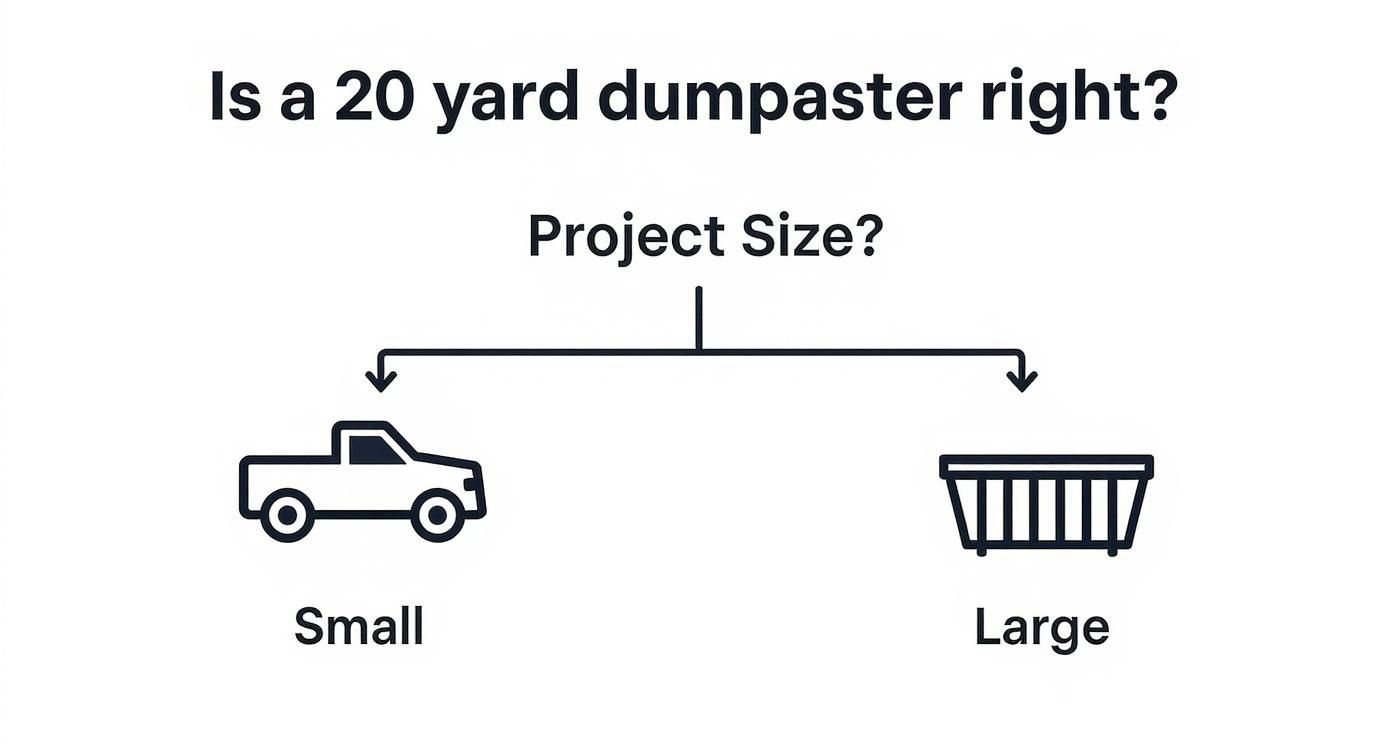
As you can see, once your project generates more junk than a pickup truck can handle in a couple of trips, a roll-off dumpster is the way to go. The 20 yard option is that versatile middle ground that works for so many scenarios.
Picking the right roll-off dumpster size is a big deal. Go too small, and you're stuck paying for a second dumpster. Go too big, and you've wasted money on empty space. To give you a better sense of where the 20 yarder fits in, we put together a quick comparison with our other popular sizes.
For a deeper dive, feel free to check out our full guide on what size dumpster you need for your project.
Here’s a comparative look at our different roll-off dumpster sizes. This should help you lock in whether the 20-yard option is the best fit for your project's scale.
| Dumpster Size | Typical Dimensions (L x W x H) | Capacity (Pickup Loads) | Best For These Projects |
|---|---|---|---|
| 10 Yard Dumpster | 12 ft x 8 ft x 3.5 ft | Approx. 3 loads | Small bathroom remodels, single-room cleanouts, minor landscaping, heavy debris (dirt/concrete). |
| 15 Yard Dumpster | 16 ft x 8 ft x 4.5 ft | Approx. 4.5 loads | Small kitchen remodels, cleaning out a 1-car garage, small roofing jobs, smaller deck removals. |
| 20 Yard Dumpster | 22 ft x 7.5 ft x 4.5 ft | Approx. 6 loads | Large room remodels, flooring removal, whole-garage/basement cleanouts, medium roofing projects. |
| 30 Yard Dumpster | 22 ft x 8 ft x 6 ft | Approx. 9 loads | Whole-home renovations, major new construction, commercial cleanouts, large-scale demolition projects. |
| 40 Yard Dumpster | 22 ft x 8 ft x 8 ft | Approx. 12 loads | Large commercial construction, major building cleanouts, demolition of entire structures. |
This table shows why the 20 yard roll-off dumpster is such a popular, well-balanced choice for homeowners and contractors tackling those substantial projects.
Key Takeaway: For folks in Oakland, Wayne, and Macomb counties, the 20 yard roll-off dumpster is often the most balanced choice. It gives you serious capacity for big jobs while still having a manageable footprint that fits in most residential driveways.
When you rent a 20 yard roll-off dumpster, you're getting more than just a big metal box dropped in your driveway. You’re paying for a complete service designed to make getting rid of junk as painless as possible. Knowing what’s included in that price—and what isn’t—is the key to keeping your project on budget, whether you’re in Oakland County or anywhere else in Metro Detroit.
Let's pull back the curtain on the rental cost. That initial quote you get is a flat rate covering the entire process. It bundles the delivery to your job site, the pickup when you're done, and a set rental period, which is usually 7 to 14 days.
Most importantly, that price includes a specific weight allowance. For a 20 yard roll-off, you can typically expect a limit between 2 to 4 tons (4,000 to 8,000 pounds). That’s a hefty amount of weight, more than enough to handle the debris from common projects like a full kitchen gut or a massive basement cleanout.
The weight limit is a critical part of the deal. Landfills charge by the ton, so we build that disposal cost right into your flat-rate price. As long as you stay within your allowance, the price you’re quoted is the price you pay. Simple as that.
But what if your project ends up being heavier than you thought? If your loaded roll-off dumpster tips the scales over its allowance, you’ll see an overage fee on your final bill. This is standard practice in the industry, and it's calculated at a straightforward per-ton rate for the extra weight.
Pro Tip: If you're on the fence between two sizes, it's often smarter to go with the larger one. A slightly bigger roll-off dumpster can be cheaper in the long run than getting hit with overage fees.
Estimating the weight of your junk is the best way to avoid those extra charges. While it's not an exact science, think about what you're tossing. Old furniture and drywall take up a lot of space but are relatively light. On the other hand, roofing shingles or busted-up concrete are incredibly dense and add weight fast.
Speaking of dense materials, things like concrete, dirt, brick, and asphalt are in a league of their own. If you were to fill a 20 yard dumpster to the top with concrete, it would blow past its weight limit and be too heavy for the truck to legally haul.
That’s why we handle heavy debris differently. Here at Dumpsters Now, we have specialized roll-off dumpsters for these materials. This usually means you can only fill the container to a certain line (often halfway) to keep the total weight safe and legal for transport.
If you’re tearing out an old patio in Wayne County or a driveway in Macomb, just give us a heads-up when you call. We'll set you up with the right dumpster and give you clear loading instructions. For a full rundown of what’s good to toss and what’s not, check out our guide on what can you put in a dumpster. It’ll help you avoid any surprises or extra fees.
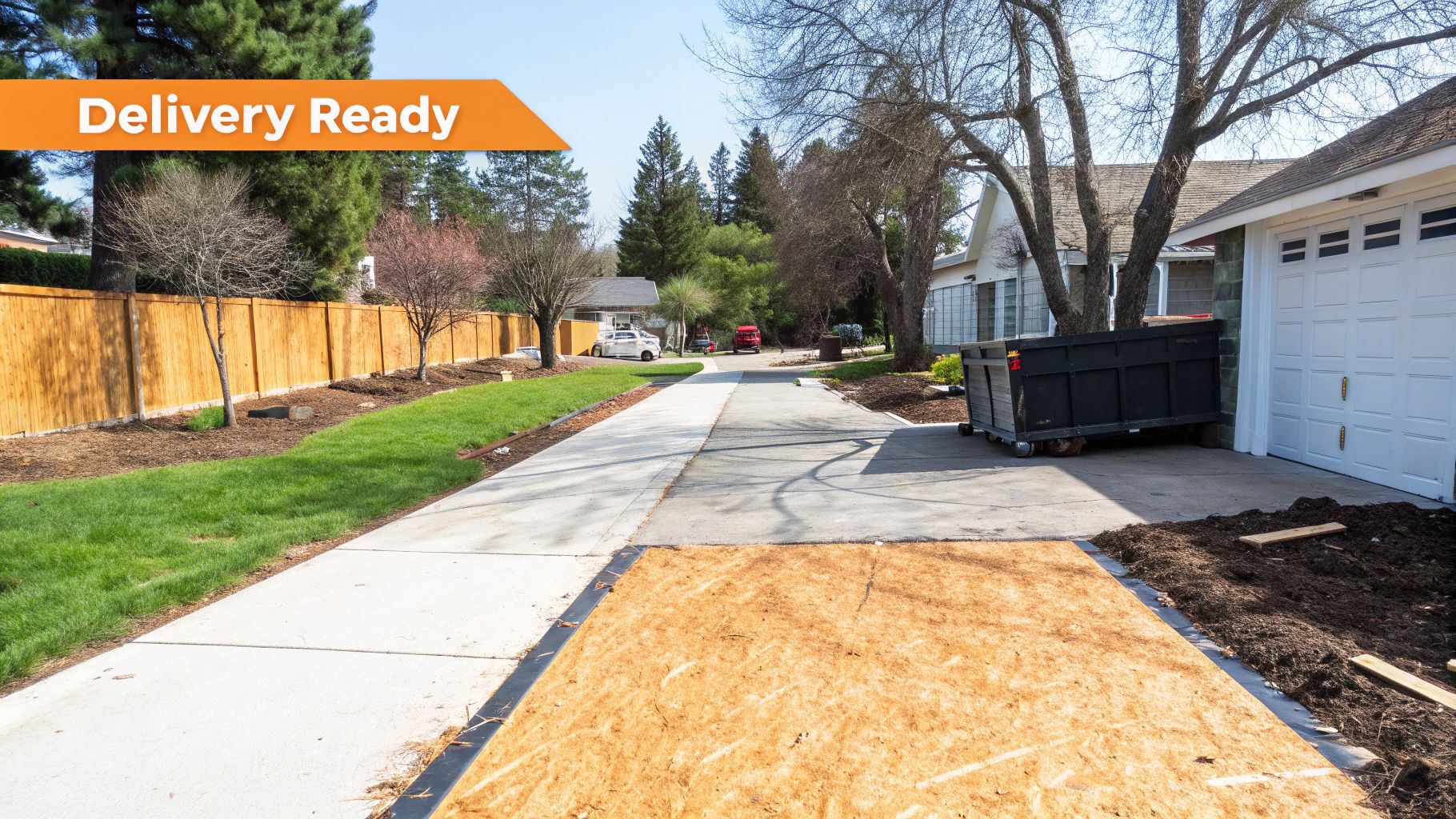
A smooth dumpster rental experience starts way before our truck arrives. Taking a few simple steps to get your site ready is the secret to a fast, safe, and damage-free delivery. This all comes down to two big things: figuring out if you need a permit and getting the drop-off spot ready to go.
A little planning at this stage goes a long way. It prevents delays, protects your property, and lets you focus on the real work ahead.
The first question is always the most important: where will the 20 yard dumpster actually sit? That one detail will tell you whether you need to get in touch with your local city hall.
The rule of thumb is pretty straightforward. If the roll-off dumpster is going entirely on your own private property—like your driveway—you typically do not need a permit. Easy enough.
But, if any part of that container has to be on public property, like a city street, sidewalk, or alley, then a permit is almost always required. Municipalities across Oakland, Wayne, and Macomb County have specific rules to keep public areas safe and accessible for everyone.
Important Note: Applying for a street permit is the customer's responsibility. We strongly recommend calling your local municipal office or city clerk well before your delivery date, because processing times can really vary.
Skipping this step can lead to fines and orders to move the dumpster, which can bring your whole project to a grinding halt. A quick call to your city's building or public works department is all it takes to get the right information.
Once you have the location figured out, it’s time to prep the area. A roll-off truck needs a surprising amount of room to back in, maneuver, and safely place a 22-foot-long container. It's like trying to parallel park a very large, very heavy vehicle.
To make sure our driver can get in and out smoothly, just run through this quick checklist:
Taking these steps ensures our driver can put your 20 yard dumpster exactly where you need it without any headaches. This is especially true for homeowners, who make up a huge part of the market. In fact, mid-sized containers are so popular that 20-30 yard dumpsters accounted for approximately 49.1% of the market share in 2023, with the U.S. Midwest heavily favoring the 20-yard size for home projects. You can learn more about dumpster rental business trends on Curbwaste.com.
Here’s one last pro tip: protect your driveway. While we are always careful, laying down a few large sheets of plywood where the dumpster's steel wheels will rest is a great way to prevent potential scratches on your concrete or asphalt.
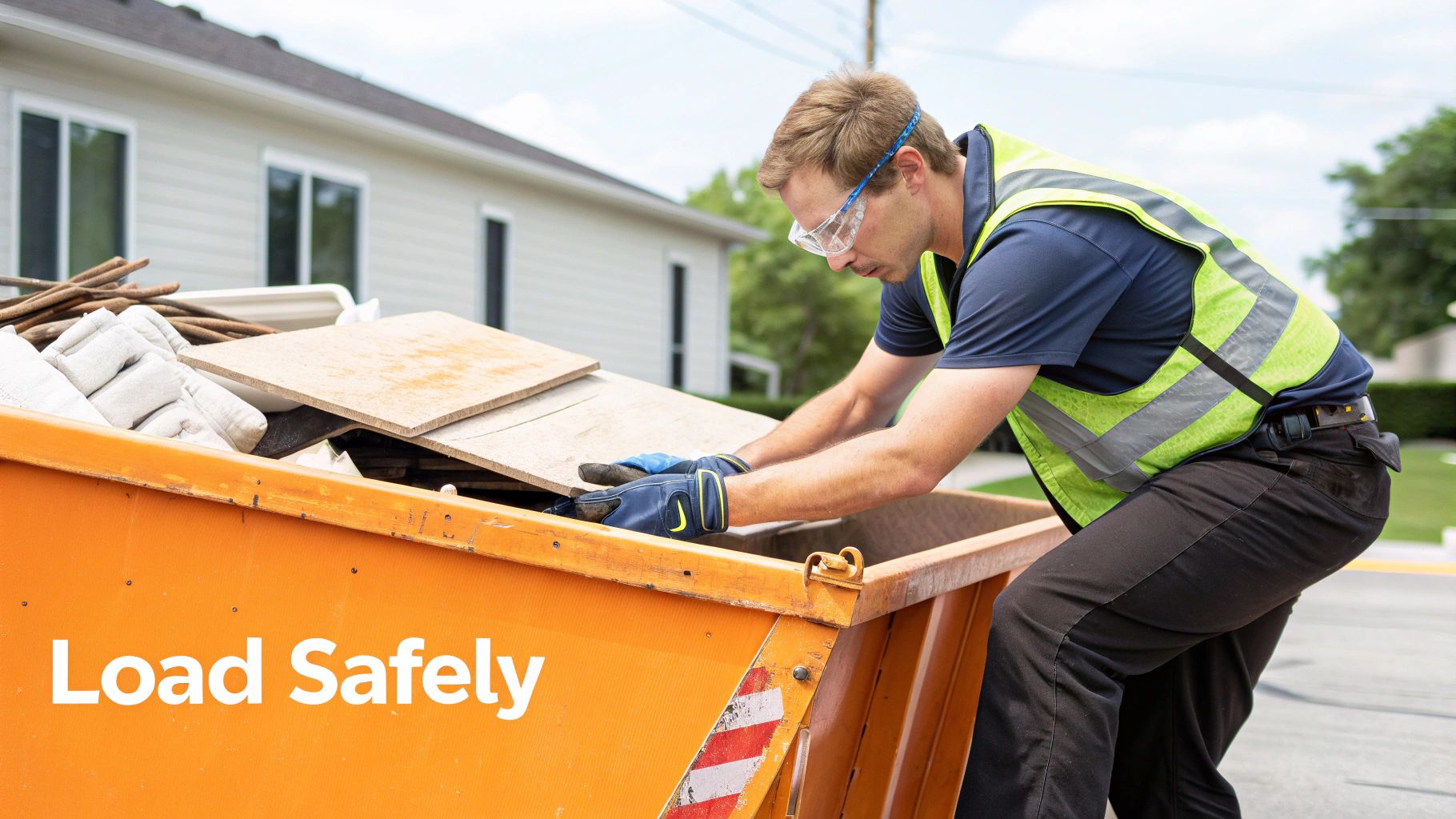
Once your 20 yard roll-off dumpster is perfectly placed, the real work begins. Loading it the right way is about more than just tossing junk in—it’s a strategy to get the most out of every square foot you've paid for while keeping everyone safe. A smart loading plan makes a huge difference, preventing wasted space and ensuring pickup day goes off without a hitch.
The best way to tackle it? Load your roll-off dumpster like you're packing a moving truck. Start by walking your heaviest and bulkiest items in through the rear door. Place them at the bottom and spread them out evenly across the floor. This creates a solid, stable base and keeps the dumpster from becoming top-heavy or unbalanced.
To get the most bang for your buck, you need to think in terms of volume and density. The goal here is simple: minimize empty air pockets and fit as much as you can without going over the weight limit.
Break everything down. Seriously. That old bookshelf, those giant cardboard boxes, or that rickety wooden table should all be flattened or taken apart before they go in. This one simple step can free up a surprising amount of room.
After the heavy stuff is in place, you can start adding the lighter debris on top, filling in all the gaps. This method isn't just efficient; it also helps distribute the weight evenly, which is absolutely critical for a safe haul away.
Just as important as knowing how to load your dumpster is knowing what you can’t put in it. For good reason, local and federal rules prohibit certain materials from being thrown into standard landfills due to safety and environmental risks. Tossing these items into your roll-off can lead to a rejected load and some pretty hefty fines.
Here’s a clear list of items that should never go into your dumpster:
If you're stuck with any of these items, your best bet is to contact your local municipality in Oakland or Wayne County. They can give you info on designated hazardous waste disposal events.
Safety First: The convenience of a dumpster rental is a huge part of its value, which has contributed to the growth of the industry. The global roll-off dumpster market was valued at approximately $4.02 billion in 2024 and is expected to grow significantly due to increased construction and better waste management awareness. You can read the full research about the growing dumpster market on FactMr.com.
Finally, safety is non-negotiable. While you're loading, always wear the right protective gear—sturdy gloves and closed-toe shoes are a must to protect yourself from sharp objects or falling debris.
But the most important rule of all is to never overfill the dumpster. All your debris has to be level with the top rim of the container. Not a bit higher. Overloaded dumpsters are a serious hazard on the road, and our drivers are legally prohibited from hauling them. Sticking to a level load ensures a safe trip to the landfill and helps you avoid extra fees for a pickup attempt we can't complete.
Even the most buttoned-up project plan has a few question marks. When it comes to renting a 20 yard roll-off dumpster, getting those questions answered before the container shows up is the secret to a smooth, headache-free job.
We get calls all the time from folks across Metro Detroit with the same practical concerns. To help you plan with total confidence, we’ve put together a quick guide to the most common questions we hear.
This is the big one, and for good reason. A 20 yard dumpster holds—you guessed it—20 cubic yards of material. That's a huge amount of space, but what does it actually look like? Picture about six standard pickup truck beds filled to the brim with debris.
In real-world terms, that’s usually plenty of room for all the junk from projects like:
The real trick isn't just the space, but how you use it. You'll get the most bang for your buck by loading smart. Break down big items like furniture and get your heaviest stuff in first to create a solid base. This simple strategy ensures you're using every square foot you paid for.
Tossing prohibited items like paint, tires, batteries, or hazardous chemicals into a roll-off dumpster is a surefire way to get hit with extra fees. This isn't just our rule; it's a matter of state and federal law. Landfills have incredibly strict regulations to protect our local environment.
When a container arrives at the disposal facility with banned materials, they'll either reject the whole load or charge hefty special handling fees. Unfortunately, those surprise costs have to be passed on to the customer.
The best way to avoid this is to stick to the list of accepted materials. If you have hazardous waste, the right move is to contact your local municipality in Macomb or Oakland County. They’ll point you to designated collection sites or special disposal days set up to handle those items safely.
Nope! We know you've got a project to run and can't always hang around waiting for a truck. As long as we have clear instructions ahead of time, you don’t need to be present for delivery or pickup.
Simple Preparation is Key: Just make sure the spot where you want the dumpster is totally clear of cars, equipment, or any other roadblocks. Our driver will take it from there. For pickup, all we need is clear access to the container—and make sure it isn't overfilled.
That said, if you have a tricky spot in mind for placement or you’re worried about your driveway in Wayne County, it’s always a good idea to be available by phone. That way, our driver can give you a quick call if they have any questions and make sure the dumpster lands exactly where you need it.
Our standard rental for a 20 yard dumpster is typically 7 to 14 days, which is baked into your initial flat-rate price. For most home renovations and cleanouts, we've found this gives people more than enough time to get the job done.
But projects don't always stick to the schedule. Whether it's a surprise setback or a patch of bad weather, sometimes you just need more time. If you realize you need the dumpster a little longer, extending your rental is almost never a problem.
Just give us a call as soon as you think you’ll need an extension. We'll add time to your rental for a flat daily rate. A quick heads-up is all it takes to make the arrangements and keep your project moving forward without a hitch.
Ready to tackle your project with the perfect-sized dumpster? At Dumpsters Now, we make renting a 20 yard roll-off dumpster simple and stress-free. Get fast, reliable delivery and transparent pricing for your next cleanout or renovation. Book Your 20 Yard Dumpster Today!
Yes. All of our dumpster rentals will have a hinged back door that will easily swing open.
No. Roll-off dumpster rentals do not include any type of cover or lid. We recommend using a tarp to cover the dumpster to prevent nearby residents from throwing unwanted trash in your dumpster.
The truck that carries the roll off dumpster drives onto a scale at the disposal facility where an initial weight is recorded. Next, the truck empties the contents and drives onto the scale again to record the weight of the truck and the empty dumpster. The difference between the first and second weight is the weight of the debris in the dumpster. All of our scales are regulated by the state bureau of weights and measures.
Large and bulky electronic waste items, mattresses, tires, and items containing freon may incur a per-item fee at the disposal facility. Every situation is different, so please contact us for more details.
Hazardous waste is prohibited. This includes chemical products, herbicides, pesticides, radioactive material, solvents, flammable liquids, propane tanks, motor oil, transmission oil, contaminated oils mixed with solvents, gasoline, antifreeze, petroleum contaminated soil, lead paint chips, microwaves, fluorescent tubes, medical waste, asbestos, and animals.
Contact us and let us know what you plan on using the dumpster for. We’ll let you know if any of your items are prohibited.
The price of our dumpster rentals include a one-time delivery and removal for the selected roll off dumpster, a disposal weight allowance, and the agreed upon rental period.
This depends on the size of the dumpster you rent. With that being said, the Department of Transportation regulations limit the weight of any roll off dumpster to approximately 15 tons.
Please review the applicable additional weight charges per the terms and conditions of your agreement. Contact us for more information.
Yes. If the weight of the materials in your dumpster exceeds the included weight quoted in your order confirmation, you will be charged for the additional weight. We are charged by weight at the disposal facility and we pass along this charge accordingly.
Don’t let clutter or delays hold you back. With Dumpsters Now, you get fast, reliable dumpster rentals delivered when you need them.
Call or book online today!