

Over 70 5-Star Reviews
Tossing old tires out with the weekly trash might feel like the quickest fix, but here in Michigan, it’s not just a bad idea—it’s flat-out illegal. When you try to dispose of tires the wrong way, you’re creating serious environmental and public health risks that impact communities all across Metro Detroit. Let's dig into why these rules are in place and how to handle old tires the right way.
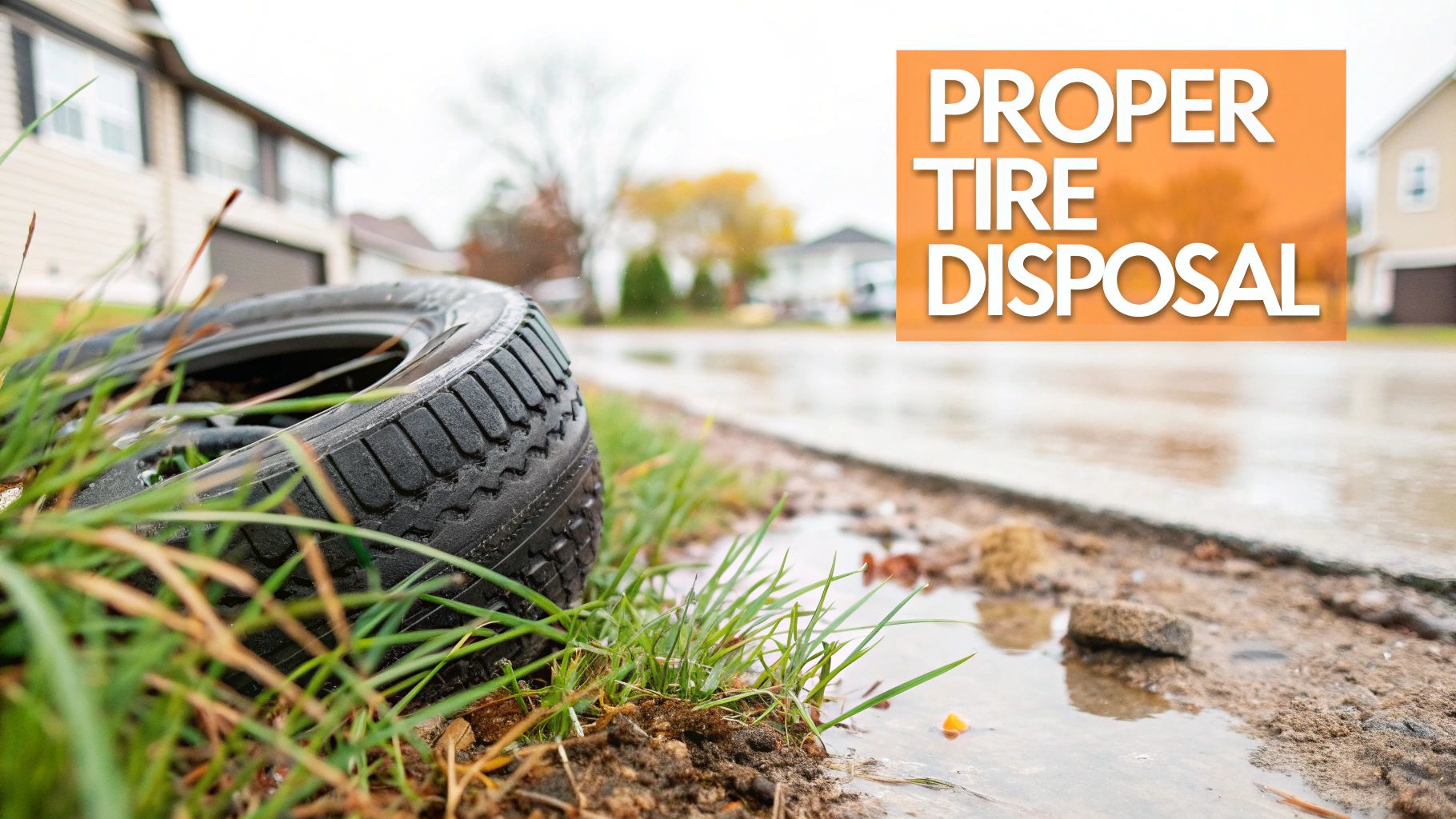
Tires aren't like the rest of your junk. Their bulky shape and tough, non-biodegradable rubber make them a huge headache when they end up where they don't belong. Michigan’s regulations are strict for a reason—they’re designed to protect our local environment from some pretty nasty, and entirely preventable, hazards.
Old tires left in a pile quickly turn into a problem magnet. Their curved shape is the perfect collector for rainwater, creating stagnant, nasty pools that become five-star resorts for mosquitoes. This isn’t just a backyard annoyance; it’s a public health issue, since mosquitoes can carry diseases like the West Nile virus.
Even worse is the risk of tire fires. Piles of illegally dumped tires are a massive fire hazard. Once they catch fire, they are incredibly difficult to put out, sometimes smoldering for months. They release a thick, toxic black smoke loaded with pollutants like sulfur oxides and benzene that can contaminate the air, soil, and groundwater for miles.
Tire fires are an environmental nightmare. The oily runoff from melting rubber can devastate local water supplies, and the airborne pollutants pose a direct health risk to anyone nearby. It’s a key reason why stockpiling tires is heavily regulated.
The State of Michigan has drawn a clear line in the sand. Under the Natural Resources and Environmental Protection Act (Part 169), whole motor vehicle tires are banned from landfills. That means you can’t just chuck them in a roll-off dumpster and hope nobody notices.
This statewide law is enforced on the ground right here in Wayne, Oakland, and Macomb counties. Each municipality has its own process to make sure tires are handled correctly.
The end goal is simple: get every single scrap tire into a system where it can be recycled or repurposed. This not only prevents pollution but also turns old waste into a resource.
If you're tackling a big cleanout, like clearing a property in Warren or emptying a workshop in Dearborn, a roll-off dumpster is the ideal solution. However, the tires need special handling. They must be declared ahead of time and placed on top of the rest of the load—we’ll get into the specifics on that later.
So, you’ve sorted your tires and confirmed they’re ready for the scrap heap. Now for the big question: where do they go?
If you're in Metro Detroit, you're in luck. There are several solid, responsible ways to get rid of old tires, making sure they stay out of landfills and get a second life. The best route for you really just depends on how many you have and how fast you need them gone.
This focus on proper disposal is a huge deal. The U.S. has gotten incredibly good at this, reaching a repurposing rate of 79% for end-of-life tires in 2024. That’s a 10.5% jump in how we use old tires compared to previous years, putting them way ahead of common recyclables like plastic and paper. It's a massive win for the environment, and you can learn more about the global impact of tire waste to see the impact.
Honestly, one of the easiest ways to handle old tires is through a retail take-back program. When you buy a new set of Michelins or Goodyears at a shop in Livonia or Sterling Heights, they almost always take your old ones as part of the service. You’ll see a small disposal fee on your bill, which just covers their cost to pass the tires along to a certified recycler.
This is the perfect hands-off solution for routine car maintenance. You drive in, get new rubber, and drive out without a second thought about the old set. Just keep in mind, this isn't a bulk disposal service. Most shops will only take tires from customers buying new ones from them, so it won’t work if you're trying to clear out a pile you've collected over the years.
Got a handful of tires taking up space in the garage? Your local municipal facility is your best bet. Wayne, Oakland, and Macomb counties all have transfer stations or recycling centers that accept tires from residents, usually for a small fee per tire.
A quick pro-tip: always call ahead or check the facility's website before you load up the car. They often have limits on how many you can bring (usually 4-10 tires at a time) and might ask for proof that you're a resident.
Be on the lookout for special collection events hosted by your county or city. These are often the absolute cheapest—sometimes even free—way for residents to get rid of tires and other tricky items. They're set up specifically to make proper disposal convenient and to stop tires from ending up in ditches or vacant lots.
The key to using these events is planning. They might only happen a couple of times a year, so when you see one announced, mark your calendar. Store your tires safely until the big day. If you aren't in a rush and want to save some cash, this is the way to go.
Feeling a bit overwhelmed by the choices? It's understandable. Here’s a quick rundown to help you figure out the best move for your situation in the Metro Detroit area.
| Disposal Method | Best For | Typical Cost | Local Example |
|---|---|---|---|
| Retail Take-Back | Replacing old tires when you buy new ones. | $3 – $8 per tire | Your local tire shop in Royal Oak or Clinton Township. |
| Recycling Center | A small number of tires (fewer than 10). | $4 – $10 per tire | A municipal transfer station or designated county facility. |
| Collection Event | Budget-conscious residents with a few tires. | Free to low-cost | Annual Macomb County "Scrap Tire Saturday" events. |
| Roll-Off Dumpster | Large cleanouts involving many tires and other junk. | Varies (fee per tire) | A property cleanout project anywhere in Metro Detroit. |
While a roll-off dumpster is a lifesaver for big cleanouts, it's crucial to remember that tires need special handling. You can't just toss them in with everything else. If your project involves getting rid of tires along with other junk, you need to know the rules. For a more complete picture of what’s allowed, take a look at our guide on what you can put in a dumpster. It’ll help make sure your cleanup goes off without a hitch.
If you’re tackling a big job, like a full estate cleanout in Livonia or clearing out a commercial property in Sterling Heights, a roll-off dumpster is your best friend. They can handle a mountain of junk, construction debris, and yard waste. But when it comes to old tires, you can’t just toss them in with everything else.
There's a specific, non-negotiable process for putting tires in a roll-off dumpster, and knowing it is the key to a smooth, headache-free cleanup. Yes, we take tires, but they need to be handled separately and you have to tell us about them upfront. This isn't just our rule; it's a legal requirement to make sure they stay out of landfills and get to a proper recycling facility.
When you rent a roll-off dumpster and know you’ve got tires to get rid of, the workflow is simple but mandatory. Following these steps ensures everything is safe, legal, and environmentally sound.
Key Takeaway: Always place tires on the very top of the load, never buried within it. This separation is mandatory. Trying to hide tires at the bottom of a roll-off dumpster will get you hit with contamination fees and penalties because it violates disposal regulations.
This "tires on top" rule isn't arbitrary—it's there for a couple of critical reasons. First, it allows the disposal facility to easily spot and separate the tires from the rest of the waste. Since whole tires are banned from Michigan landfills, they have to be pulled off the load immediately and sent to a specialized recycling processor.
Second, this simple step plugs you into a massive global effort to manage tire waste. It’s not just about local rules. The global tire recycling market was valued at $13.92 billion in 2024 and is projected to hit $19.24 billion by 2033. With over 1.8 billion tires needing disposal worldwide this year alone, proper handling at every stage—including your roll-off dumpster in Metro Detroit—is a huge deal.
This infographic gives you a quick visual of how tire disposal generally works.
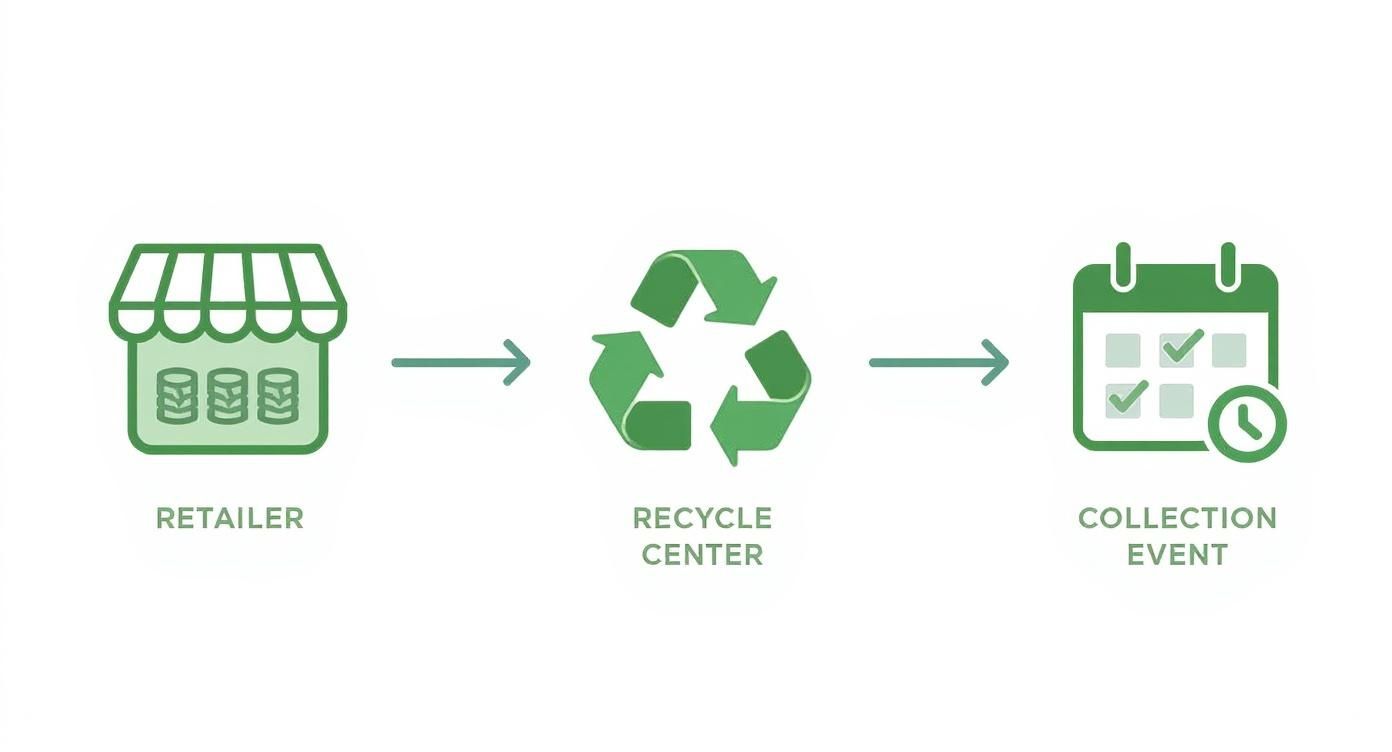
As you can see, whether tires go through a shop, a roll-off dumpster, or a collection event, the destination is always a proper processing facility. Our procedure just makes sure they get there.
Let’s put this into practice. Imagine you're cleaning out a rental property in Warren. The last tenant left the garage packed with junk: old furniture, busted tools, and a stack of a dozen old car tires. A 20-yard roll-off dumpster is the obvious choice for that much stuff.
When you call Dumpsters Now to book it, you mention the 12 tires. We add them to your order, explain the per-tire fee, and walk you through the loading instructions. You spend the weekend chucking all that garage clutter into the dumpster. On Sunday night, right before your Monday morning pickup, you lay the 12 tires neatly across the top of the debris.
Our driver shows up, sees the tires are loaded correctly, and hauls it all away. At the transfer station, the crew can easily grab the tires and send them to the recycling stream before dealing with the rest of the junk. Your cleanup is done, the property is clear, and you’ve handled every bit of waste—tires included—the right way, with no surprise fees.
When you need to get rid of old tires, one thing’s for sure: it’s almost never free. Those disposal fees aren’t just random charges; they cover the very real costs of hauling and processing tires through a complex recycling system.
Knowing what to expect financially helps you budget for your cleanup project and avoid any sticker shock, whether you're dropping off a couple of tires from your car or clearing out a whole stack from a commercial property in Macomb or Oakland county.
The cost to dispose of a single tire varies across Metro Detroit, but you can pretty much always count on a per-tire fee. This is the standard model you’ll find at retail tire shops and municipal recycling centers throughout Wayne, Oakland, and Macomb counties.
For a standard passenger car or light truck tire, you’re typically looking at a disposal fee between $3 and $10 per tire. The final price tag depends on the specific facility’s operating costs and any local surcharges that might apply. A transfer station in Macomb County, for instance, might have a slightly different rate than one in Wayne County.
As you might guess, costs go up with size. If you're dealing with bigger tires from a commercial truck or heavy equipment, get ready for a higher fee. These can easily run from $15 to $25 or more per tire, simply because they’re heavier and require more effort to process.
For big cleanouts involving more than just a handful of tires, a roll-off dumpster is often the most sensible route. However, it’s critical to know how tire disposal works in this scenario, because it's a little different. Tires are considered a special handling item and are never included in the standard roll-off dumpster rental price.
You will always be charged a separate, per-tire fee when you put tires in a roll-off dumpster. This charge is on top of the base rental cost and any weight overages. You must declare tires upfront so we can give you a transparent and accurate quote.
This separate fee covers the specialized logistics involved. When our truck comes to pick up your roll-off dumpster, we require the tires to be placed right on top of the load. Once at the disposal facility, they are pulled off by hand and sent to a dedicated tire recycling processor—a completely different waste stream from the rest of your debris.
Trying to plan a large project with mixed junk can get tricky. If you're wrestling with figuring out the right size container for all your debris plus those old tires, our guide on what size dumpster you need can point you in the right direction. It'll help ensure you have enough space for everything while accounting for that special placement for the tires. Budgeting for these separate fees from the start keeps your Metro Detroit cleanout project on track and fully compliant.
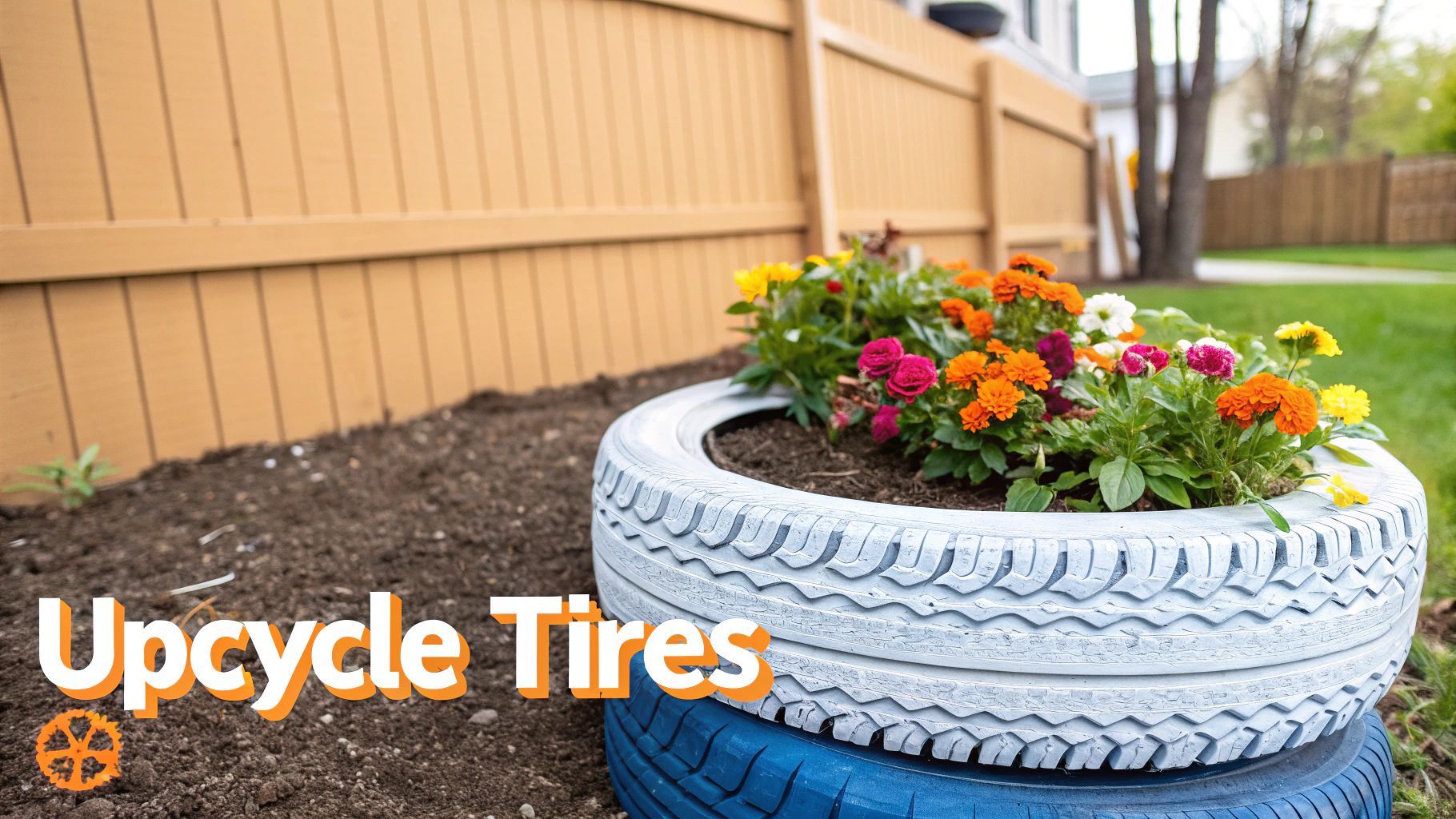
Before you schedule that pickup or haul those tires to a drop-off, take another look. For many homeowners with a bit of yard space in places like Oakland or Macomb County, the best way to deal with old tires might be to not get rid of them at all. Upcycling is a fantastic, green alternative that can save you a few bucks and add some unique character to your property.
This approach tackles a massive environmental issue right in your own backyard. Globally, tire waste is a huge problem, with an estimated 1.5 billion of them reaching the end of their life every year. The United States alone is responsible for tossing around 317 million tires annually—that’s roughly nine tires every second. You can learn more about the global impact of tire waste to see just how big this problem is. By repurposing even a few, you're making a real difference.
One of the most popular and practical ways to upcycle old tires is right in the garden. Their incredible durability makes them perfect for all sorts of outdoor projects that need to stand up to Michigan's wild weather, from scorching summers to icy winters.
A super simple but effective idea is turning tires into rugged, raised garden planters. Just lay a tire flat, fill it with good soil, and you've got an instant, contained bed for flowers, herbs, or veggies. You can stack them for more root depth or paint them bright colors to match your home's vibe. They're especially great for plants that need solid drainage and some protection from pests.
Pro Tip: Before you use a tire for any project, especially in the garden, give it a serious cleaning. Grab a stiff brush and some strong degreasing soap to scrub away all the road grime, brake dust, and chemical gunk. This helps make sure they're safe for your plants and family.
Beyond simple planters, old tires can be used to build some really creative and functional landscape elements. With a bit of elbow grease, you can transform them from junk into a defining feature of your yard.
Got kids? Old tires are a goldmine for creating fun, safe, and cheap playground equipment. The classic tire swing is just the beginning.
An old tractor or large truck tire can be partially buried to become an awesome sandbox or a small climbing structure. Or, lay a few car tires flat in a row, burying them halfway, and you've got a simple but fun obstacle course for kids to jump through. These projects don't just reuse materials; they provide hours of entertainment.
Now, while these DIY projects are perfect for a few tires, they obviously aren't a solution for a huge pile. If you’re tackling a major property cleanout in Wayne County and have a dozen or more tires mixed in with other debris, repurposing just isn't practical. In that scenario, your most efficient bet is a roll-off dumpster—just remember our "tires on top" policy for proper disposal.
When you're ready to get rid of old tires, a few questions always seem to come up. Trying to figure out the rules around Metro Detroit can feel like a headache, but it’s actually pretty straightforward once you know the process. Here are the clear, direct answers to the questions we hear most often.
Yes, you can, but this comes with a few very important rules you have to follow. You absolutely must tell the dumpster rental company beforehand that you’re planning to toss tires in there. This isn’t a step you can afford to skip.
Tires are treated as a special handling item, which means they can't just be mixed in with all your other junk. The proper way to do it is to load everything else into the dumpster first, then lay the tires flat right on top of the pile. This separation is mandatory so they can be spotted and pulled off easily at the transfer station for proper recycling. Trying to bury tires at the bottom of a roll-off dumpster is a big no-no and will lead to some hefty extra fees.
The number of tires you can offload at one time really just depends on the disposal method you pick. Your options across Oakland, Wayne, or Macomb County will look very different depending on how many you’re dealing with.
For most homeowners looking to save a few bucks, the most wallet-friendly option is almost always a county-sponsored collection event. These pop-up events are specifically designed to curb illegal dumping and are often free or very low-cost for residents. Keep an eye on the official websites for Wayne, Oakland, and Macomb counties to catch the next one.
Outside of those special events, taking your tires straight to a municipal transfer station or a dedicated tire recycler is your next-cheapest move. You can expect to pay somewhere in the ballpark of $3 to $8 per standard passenger car tire. This usually ends up being cheaper than a retail take-back service, especially if you aren’t buying new tires.
It’s a fair question. We recycle aluminum cans for cash, so why pay to recycle a tire? The simple answer is that tire recycling is a heavy-duty industrial process. Unlike valuable scrap metal, the market for recycled rubber just isn't strong enough to cover the costs, so the fees you pay are what keep the whole system from shutting down.
Those fees cover several critical steps:
Paying that small fee directly funds the infrastructure that keeps tires out of landfills and stops them from being illegally dumped in our beautiful Michigan communities. It makes responsible disposal a sustainable reality.
For big cleanouts in Metro Detroit that involve a mix of tires and other junk, nothing beats the efficiency of a roll-off dumpster. At Dumpsters Now, we keep the process simple and transparent, ensuring your project stays on schedule and completely by the book. Contact us today for a quick quote and let’s get your cleanup rolling.
Yes. All of our dumpster rentals will have a hinged back door that will easily swing open.
No. Roll-off dumpster rentals do not include any type of cover or lid. We recommend using a tarp to cover the dumpster to prevent nearby residents from throwing unwanted trash in your dumpster.
The truck that carries the roll off dumpster drives onto a scale at the disposal facility where an initial weight is recorded. Next, the truck empties the contents and drives onto the scale again to record the weight of the truck and the empty dumpster. The difference between the first and second weight is the weight of the debris in the dumpster. All of our scales are regulated by the state bureau of weights and measures.
Large and bulky electronic waste items, mattresses, tires, and items containing freon may incur a per-item fee at the disposal facility. Every situation is different, so please contact us for more details.
Hazardous waste is prohibited. This includes chemical products, herbicides, pesticides, radioactive material, solvents, flammable liquids, propane tanks, motor oil, transmission oil, contaminated oils mixed with solvents, gasoline, antifreeze, petroleum contaminated soil, lead paint chips, microwaves, fluorescent tubes, medical waste, asbestos, and animals.
Contact us and let us know what you plan on using the dumpster for. We’ll let you know if any of your items are prohibited.
The price of our dumpster rentals include a one-time delivery and removal for the selected roll off dumpster, a disposal weight allowance, and the agreed upon rental period.
This depends on the size of the dumpster you rent. With that being said, the Department of Transportation regulations limit the weight of any roll off dumpster to approximately 15 tons.
Please review the applicable additional weight charges per the terms and conditions of your agreement. Contact us for more information.
Yes. If the weight of the materials in your dumpster exceeds the included weight quoted in your order confirmation, you will be charged for the additional weight. We are charged by weight at the disposal facility and we pass along this charge accordingly.
Don’t let clutter or delays hold you back. With Dumpsters Now, you get fast, reliable dumpster rentals delivered when you need them.
Call or book online today!